
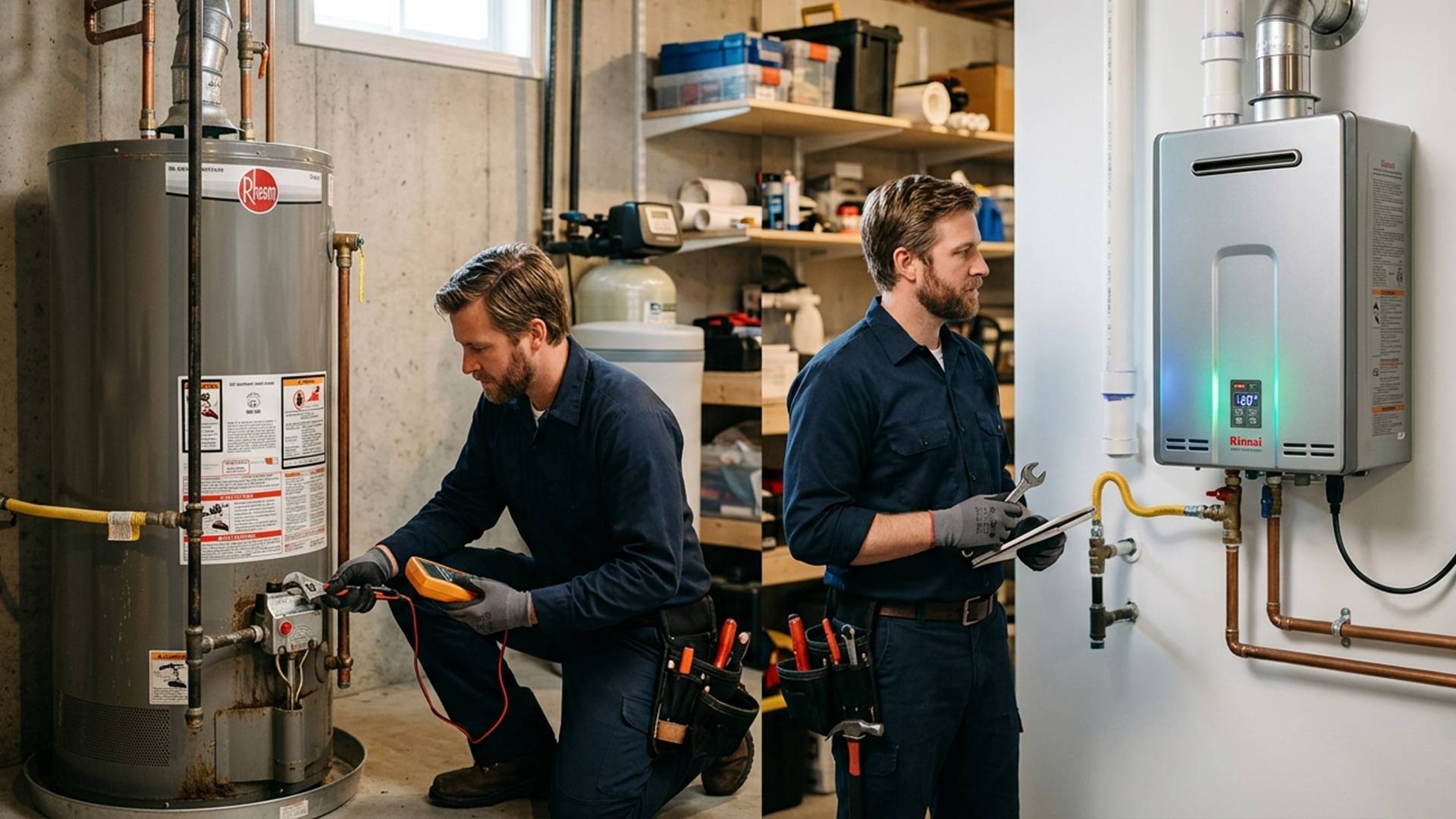
Tank vs tankless water heaters: which is right for you?
Introduction
Having to perhaps choose between the water heaters which are either with the tank or the tankless ones depends entirely over the subjective needs and requirements of the business entities. A few criteria’s to although consider before making the ultimate decision is the frequency of the usage, the budget limitations, as well as the overarching goals pertaining to efficiency requirements which the company has.
What is a tank water heater?
Definition and how it works
It works essentially by the process of storing the water as well as heating it up in order to efficiently prepare for the use of consumption.
Common features
The features which are the most prominent are the storage capacity which is about twenty to eighty gallons, the upfront cost being extremely affordable, as well as easy to use simplistic design
Ideal use cases
The use cases which are the most ideal consists of residential purposes, businesses as well as places which have high simultaneous demands for the water.
What is a tankless water heater?
Definition and how it works
The tankless water heater operates by heating the water based in the subjectivity of the demand via the usage of electricity as well as gas as their primary heating elements.
Common features
The major features comprises of the compactify nature of the size, no storage tanks, as well as the operations being energy efficient.
Ideal use cases
The use case consists of spaces which needs the supply of hot water on a continuous basis and are also looking for an energy efficient option.
Key differences between tank and tankless water heaters
- Initial cost: the tanks lower initial costs and the tankless ones are more costly upfront
- Energy efficiency: the tanks usually are really well when it comes to standby the heat losses, and the tankless heater are more efficient in nature
- Lifespan: the tanks are a lifespan of eight to twelve years whereas the tankless has it about fifteen to twenty years
- Space requirements: the tanks are more bulkier and thus requires more space and the tankless are compactified and are mounted in the wall usually
- Hot water supply: the tanks have a limited nature of space whereas the tankless ones provides continuity on the flow
- Maintenance needs: the heater with tank are more simple when it comes to maintenance but the tankless heaters are required periodic descaling
Pros and cons of tank water heaters
PROS
The costs are much lower comparatively, the installations being much simpler
CONS
There being increased amounts of the loss in energy, limitations in the supply
Pros and cons of tankless water heaters
PROS
Much more efficient in terms of energy, the supply of hot water being endless and continues
CONS
The initial costs are much higher, limitations of the flow rates
Factors to consider before choosing
- The size of the households, if the demand are higher the tanks may be more favourable
- The upfront versus the long term trade off of the budgets.
- Availability of space
- If focus is efficiency the tankless better be preferred
- Existence setup of plumbing
Which option is better for commercial properties?
In terms of the commercial prospects the tank systems which do have the areas for high demands are usually the most significant for the usages which are more simultaneous in nature for reference hotels etc. The tankless systems on the other hand are best suitable the primary goal of the businesses is to majorly achieve utmost efficiency and effectiveness.
When to call a professional
You should be seeking professional help when there is inconsistency in the flow of water, the bills of energy are increasing exponentially, as well as the respective age of the system. The benefits perhaps are the accuracy in the sizing, compliance with the codes and regulations, as well as safety and long term performance.
Conclusion
Ultimately the heaters which comes with the tank are more effective when it comes to costs, have higher reliability for the heavy usages and the tankless heaters are better efficient overall and the long term savings which comes with it is also much more impressive and also provides continuity in the supply of water. There perhaps is no one right choice for all, in order to make the most effective result know your needs with clarity and thus expect optimal results.