
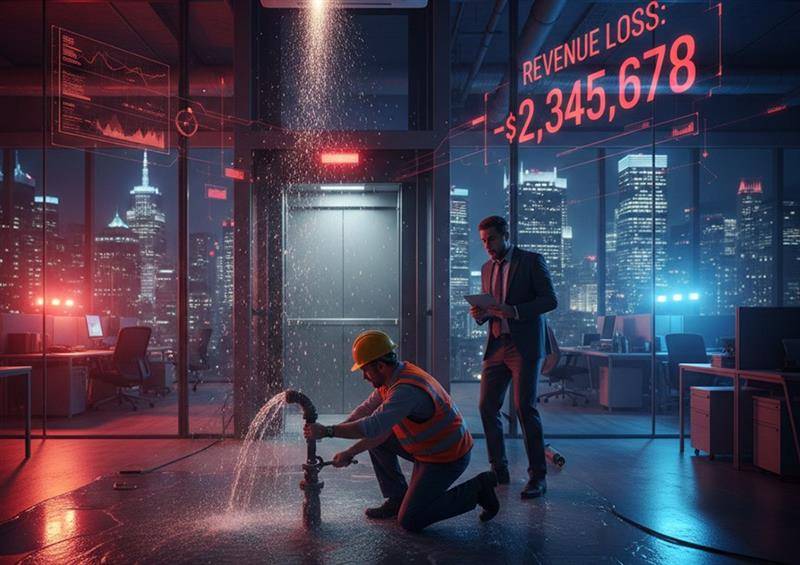
Why System Downtime Costs Explode After Business Hours
The most severe impact of that is after the hours when revenue-generating processes are at rest and the commercial systems failure (HVAC failures, plumbing sewerages, power outages, etc.) will be felt directly without the buffers of the day. Facility managers face magnified losses due to premium repairs, lost employees, lost bookings and property damage that is not checked overnight. These multipliers are reduced by proactive planning which converts a disaster to an event manageable.
Immediate Revenue Losses Escalate
Downtimes during the day disturb optimal operations; evening failures deny the businesses any possible revenues due to events, shifts, or 24-hour enterprises. Hotels are losing room reservations when the elevators malfunction at midnight time; restaurants losing late night covers because of flooding in the kitchen. Offices are not directly hit by loss of revenue but lose contractor overtime or security patrol expenses.
Long outages compound: an outage of HVAC four hours in summer puts guests through a strand, which induces refunds and bad reviews that chase off subsequent business. Warehouses in e-commerce stop delivery, postponing orders and exposing itself to penalties of SLA. Night shifts make machines idle, which burns labour without giving a product. After-hours eliminates the concept of natural recoveries and moves the losses to entire days.
Premium Service Fees Dominate
Post-working hours calls are charged with 50-100 percent jointure on the labour, and the dispatch charges are also set. Rates of $200 per hour during the daytime move to between 300 and 400 during the night times and on the holidays; it doubles during holidays. Technicians mark up rush parts thus will delay other service calls to address emergencies.
This effect is intensified by commercial factors: access to rooftop chillers can only be obtained by overtime staff, cranes, scaffolding that are not available in the day time. Plumbing floods require the deployment of extraction teams which work outside the 9-5 range, compounding damages before the arrival in the morning. Installation of bills is skyrocketing: a basic daytime valve replacement is now costing fifty dollars and a midnight riser repair is now costing twenty-five dollars and up.
Labour and Productivity Drain Intensifies
Overnight staff Oncall staff are paid overtime or without work. Lobbies with dark lighting are patrolled by security guards; cleaning staffs are busy with nothing when there is a flood. Patients are moved to different hospitals; rooms are reallocated manually at the hotels.
The waves of the morning still persist: tired working hours create more problems in solving the errors of the night, and dissipate crucial work. Managerial time is needed on tenant complaints; there is insurance paperwork. Days go by without increasing productivity with loss of trust due to the frequent disruptions.
Unchecked Damage Snowballs Overnight
After-hours breakdown occurs and develops without real-time checkup. Small drips of the pipes build up into rivers that flood under-floors; electrical panels are leaked by HVAC up until dawn. During summer chiller loses, overheated machinery deforms parts before being noticed in the morning.
Water goes to walls, breeding mold which takes weeks of procedure to clean up. Refrigerant leakage, polluting the air handlers and poisoned duct. Memories breed as a result of weekend elevator outages that create liability claims. Daytime accidents are detected immediately; night-time permits causes of exponential damage.
Opportunity and Reputation Costs Linger
Ripple effect of after hours cancellations: event venues lose deposits; factories lose their deadlines, and the contracts are lost. Midnight discomfort is the cause of an increase in negative reviews at the hotel. Data centres are exposed to bad fines due to temperature moves.
Reputation: Reputation is silent: tenants are quietly seeking solution by finding an alternative after being repeatedly bothered by night-time disturbances. Partners bear in mind bad facilities when making renewal negotiations. The recovery activities draw out marketing funds into the damage control.
Strategic Mitigation Reduces Multipliers
Vendor contracts ensure priority without full premiums after the hours. Backup chillers, other secondary risers that come in between the gaps until morning are called redundant systems that allow 24/7 monitoring by BAS and sensors to alert managers before complete failure.
Problems quickly appear in drilled ERT protocols isolating zones, setting up portable equipment. CMMS uses trends to predict failures, which are resolved during the day. Coverage after hours is customized by insurance policies; ETAs of suppliers are mandated by SLA.
The effects of after-hours downtime compound with fees, non-productivity, destruction, and non-monetary losses. Proactive design is used to turn risks into opportunities and maintain profits at all times.