
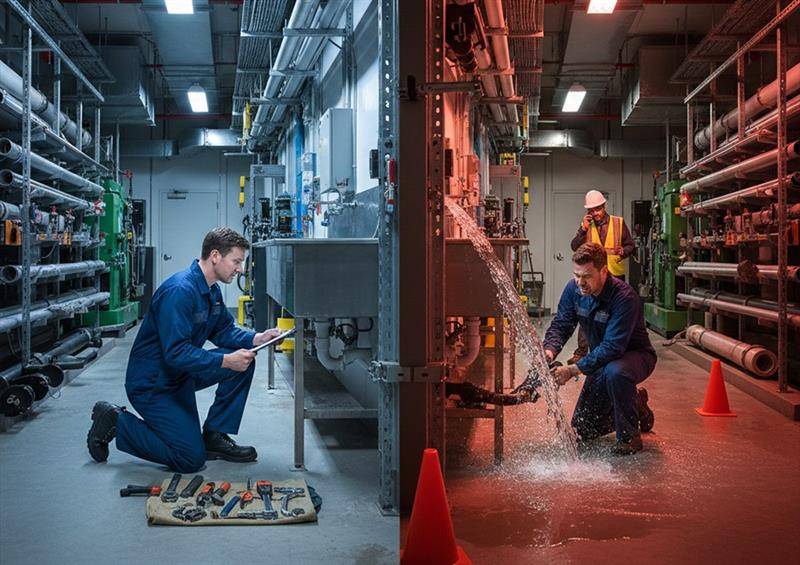
Routine HVAC Repair vs Emergency Service in Commercial Facilities
HVAC Commercial facility managers must ensure that they differentiate routine repairs and HVAC emergency services of plumbing, HVAC and mechanical systems in their buildings to ensure the expenses are limited, disruptions minimized and equipment lifestyles extended. Prevention is an example of routine repairs, which are performed to counteract wear before it becomes uncontrollable as opposed to emergency HVAC services repair, which arise as a result of unexpected failures that pose dangerous or compliance risks. Choosing the right approach helps in avoiding minor problems that put in place big crises.
Characteristics of Routine Repair
Routine maintenance deals with foreseeable, not urgent problems that are detected by periodic inspections, performance records, or reporting by the user. The examples of the typical ones may include tightening loose pipe fittings, changing frayed HVAC fan belts, servicing pump bearings or cleaning clogged strainers in cooling towers. Such interventions are done within planned maintenance periods, which are normally at night or weekends, and this way they can coordinate with the tenants, and reduce the effect of the business.
Technicians bring in common equipment and parts as well and follow the manufacturer protocol of disassembling, replacing parts, adjusting and calibration. After repair, it is tested that all is recovered and documented information on the same is added to asset history in order to do trend analysis. This scientific procedure recognizes similar problems that arise periodically, e.g. wear caused by vibration and enables modification of lubrication frequencies or aids. With time, regular maintains maintain optimal performance, avoid reduction of efficiency, and increase the lifespan of capital investments by a number of years.
Characteristics of Emergency Service
Emergency services are activated where there is an immediate threat of gushing pipe ruptures, refrigerant leaks caused by failed compressors, sewage overflowing into the public or chiller shutdowns that could result in overheating of the servers. These situations demand a 24 hour response, which in most cases is between two and four hours, and with life and damage control being prioritised over complete perfection.
The first reaction isolates the fault closing main valves during floods, shutting relatively dangerous HVAC systems, or moving the people out of the elevators. To stabilize the situation until parts are installed or specialists are contracted, temporary devices, such as bypass lines, spot coolers, or containment pumps, are then used by the technicians. The scope is then extended to address the secondary impacts like water extraction or electricity hazards. The root-cause diagnosis typically comes after an initial containment since rushed permanent repairs can be quickly repeated. An emergency will put redundancy of the system to test and create loopholes in backups or monitoring.
Core Differences in Process and Consequences
Common repairs only have one or two technicians work within regular hours, and planned access as well as layout familiarity. It is a painstaking process, and all precaution measures are taken but overall not very intensive because of the controlled environment. The disruptions are therefore not spread and the occupants are unaware of them.
After-hours mobilisation of four or six specialists in situations of emergencies requires the entire scope of the site, which also incorporates locked mechanical rooms and rooftops. A sense of urgency takes precedence over quality; a basic functionality can be recreated by improvised solutions as the real solutions are being implemented. The businesses come to a standstill, the kitchens are shut, production is shut down, tenants are leaving, until the safety is ensured again. Although routine maintenance becomes more effective in enhancing reliability, emergencies bring out the weaknesses that can be mitigated through the subsequent audit.
Cost Implications and Prevention Strategies
The standard of repairs is affordable, and the base labour costs, non-call charges, and volume-based contractual rates. Components are delivered on manufactures of the ordinary network without any premiums and hence forecastable balances.
Repairs that are considered to be emergent add a considerable amount of costs: overtime can be half a wages more and there can be a markup on rush parts, and the flat call-out cost is huge. There are indirect costs caused by downtime: revenue on closed floors, food spoiled on kitchens or overtime on transfers. Insurance claims add to additional paperwork and deductibles.
Prevention creates a bias towards dominance by routine. Computerised maintenance systems monitor work orders, sensors identify aberrations such as pressure drops, and regularly on a yearly basis, the auditors prioritize high-risk assets. The vendor partnerships have special priority in case of emergencies without paying entire premiums. Maintenance ought to be planned in terms of subtle manifestations including unusual noises, low flow whereas the 24/7 lines should be held in reserves and in processes of active threats.
Strategic facilities empower training, redundancies and analytics to transform the possible emergencies into every day routine duties. This vision saves life time expenses, builds trustworthiness, and makes operations proactive, rather than defensive.