The Role of Technology in Modern Commercial Plumbing Maintenance
Plumbing systems form the foundation of building mechanisms in the modern rapidly changing business environment to provide water supply services, drainage services, heating, and cooling services to the building. Technology has become an essential part of the modern commercial plumbing maintenance developed as the business owners and the facility managers seek effective, affordable and sustainable solutions to ensure that these vital systems run as efficiently as possible. The evolution of technology has revolutionized the traditional methods of plumbing maintenance, which was a reactive approach and shifted to a more proactive and data-driven asset-management approach that leads to reduced downtimes, prolonged system life, and reduced operational costs. This paper will investigate the direction in which technology is driving commercial plumbing maintenance in 2025 and beyond with a focus on major breakthroughs and the real-world advantages.
The Traditional Challenges in Commercial Plumbing Maintenance
Commercial plumbing systems face special challenges that can be attributed to their size, complexity and constant use. The old infrastructure, wear, tear, leaks, corrosion, blockages in pipes, and inefficient heating of water may cause expensive failures, health risks, and unnecessary high utility bills. In the past, maintenance has been performed in a reactive manner, which means that problems came into being before maintenance needs were addressed. The type of reactive treatment leads to unexpected downtimes, costly emergency repairs and in some cases, permanent water damages.
As buildings are becoming more intelligent and the demands of sustainability are growing, facility managers need solutions that not only address existing problems, but forecast and avert future problems. The changing needs have been met by technological innovations that have provided means to have modern maintenance practices that are proactive, predictive, and in line with the environmental goals.
Smart Plumbing Systems: Sensors and IoT Integration
The incorporation of smart sensors and Internet of Things (IoT) tools is one of the most important commercial plumbing technological tendencies. The sensors are constantly checking parameters of water flow, pressure, temperature, humidity and leakage detection along the plumbing infrastructure.
Once linked to a central management solution, IoT-based sensors can notify the maintenance crews in real-time about any anomalies, such as leaks, blockages, and pressure drops. Timely identification reduces water wastage, prevents widespread destruction and expensive emergency services. These sensors also provide real-time data, which is helpful in off-site diagnostics and condition monitoring and minimizes the need to conduct physical inspections as well as enhance the scheduling of maintenance.
Indicatively, a residential or commercial property management company can install water sensors at strategic points to identify a slow leakage early enough and, therefore, stop it before water leakage spoils tenant facilities or equipment stores. Such real-time visibility increases the life of the assets and also improves the safety of the occupants.
Predictive Maintenance Powered by Data Analytics
An IoT data in itself is the driver of the reactive maintenance to the predictive one; its full potential is deployed with the adoption of the state-of-the-art data analytics and artificial intelligence (AI). Predictive maintenance is based on the past patterns, sensor data, and machine-learning models to anticipate possible failures and prevent them in advance.
Using the trends like the loss of water pressure or the increase of the pipe vibration, AI models can indicate that a particular part might be approaching a failure. Scheduling of maintenance can be then done in advance helping eliminate unexpected failures and resource scheduling is also optimized.
Predictive maintenance also enhances the reliability of the system as well as minimizes the cost of operations because the intervention is made at the most appropriate time thus preventing untimely replacement or unnecessary downtimes. In commercial buildings that have huge and complicated plumbing systems, this method does significantly improve the effectiveness of maintenance.
Remote Monitoring and Mobile Maintenance Solutions
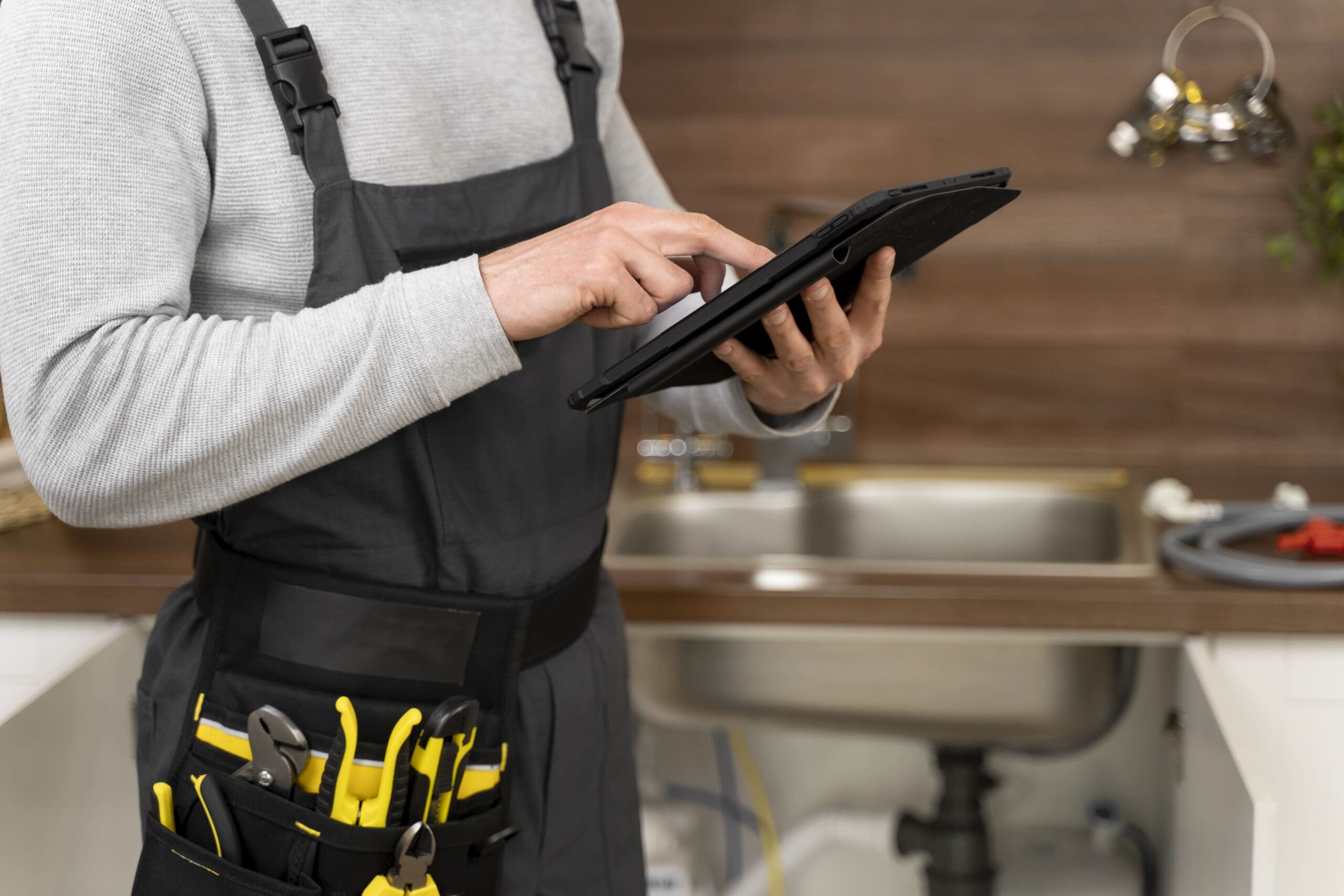
Remote monitoring technologies are transforming how a maintenance team is approaching the plumbing problem. Staff can now remotely access the data of the plumbing-systems in cloud based platforms in the phones, tablets or laptops. This will allow making decisions quickly and cooperating with technicians on-site.
Moreover, the mobile applications with the cloud-management systems enable real-time work-order generation, assignment, and monitoring of the tasks. Technicians are provided with immediate warning and detailed diagnostics, making the visits to the service easier and removing guesses.
Furthermore, there is the emergence of augmented reality (AR) and wearables in the plumbing-maintenance sector. AR tools may superimpose the plumbing schematics or repair instructions on the field of view of the technician, enhancing accuracy and shortening the repair times.
Energy Efficiency and Water Conservation Technologies
Green is a rising trend in business premises and technology supports this by having plumbing systems that are energy-saving and water-conservative. Recent water heaters such as tankless and solar power models have been connected with maintenance platforms so that the performance and inefficiencies can be identified.
The water-saving fixtures like low-flow ones or sensor-controlled faucets do not only save water but also integrate with smart-building systems to deliver usage monitoring. This knowledge allows facility managers to detect leaks or abnormal consumption in order to correct it.
In addition to the water conservation, the smart plumbing systems also save energy; they enhance the control and the scheduling of pumps, booster, and heating systems, which save energy and lowers operational expenses, and also green building comes with the LEED certification.
Role of Building Information Modeling (BIM) and Digital Twins
The digital-twin and Building Information Modeling (BIM) technologies are slowly transforming the commercial plumbing design, maintenance, and renovation processes. BIM creates intricate 3-dimensional digital formats of plumbing systems, allowing the engineers and maintenance staff to visualize and design interventions in advance, prior to the actual physical work being done.
This is expanded in digital twins, which connect a virtual model of the plumbing network with real-time sensor data. This establishes a live interactive simulation in diagnosing problems, testing maintenance conditions and optimization of the system itself.
Through the BIM and digital-twin technology, facility managers are able to understand the behavior of the system better and make safer, faster, and less costly decision of maintenance.
Cybersecurity Considerations in Smart Plumbing
An increased level of connectivity translates into an increased risk of cyber attack. Since the plumbing systems are being incorporated with the IoT and building-management networks, securing these systems against cyber-attacks is urgent. The unauthorized access may interfere with the water flow, control heating systems, or lead to data breaches.
Cyber security features including encrypted communications, network segmentation, firmware updating and access controls have become part of modern commercial plumbing-maintenance plans to protect the integrity of the systems and the safety of occupants.
Future Outlook: Integrating AI, Robotics, and Automation
In the future, artificial intelligence and robotics are likely to continue to change the commercial plumbing maintenance. The use of autonomous robots that can detect any defects or perform small repairs to the pipeline can potentially minimize human risk and enhance accuracy in hard to reach spots.
Automation based on AI will optimize fault-detection algorithms, provide systems with self-healing, and develop adaptive maintenance programs, which will raise the efficiency of operations. Smart-city integration will enable real-time water management concerning use and environmental dynamics.
For businesses seeking to harness the power of advanced plumbing technologies, Morgan Mechanical offers expert solutions that integrate smart systems, IoT sensors, and predictive maintenance powered by AI. Our experienced technicians leverage real-time data analytics and remote monitoring tools to identify issues early, reduce downtime, and optimize system performance. With Morgan Mechanical, your facility benefits from cutting-edge maintenance strategies that enhance energy efficiency, conserve water, and ensure regulatory compliance all while minimizing operational disruptions. Trust us to keep your commercial plumbing system running smoothly and sustainably with the latest innovations.
Conclusion
Technology is revolutionizing commercial plumbing maintenance, shifting the approach from reactive repairs to proactive and predictive management, driven by the adoption of smart plumbing systems. Smart sensors, IoT integration, data analytics, and AI-driven tools empower facility managers with real-time insights and remote control, enhancing efficiency, reducing costs, and extending asset life. Emerging technologies like augmented reality, digital twins, and robotics promise even more transformative impacts in the future. By adopting these innovations and partnering with knowledgeable experts, businesses can ensure resilient, efficient, and environmentally responsible plumbing systems that support their operational and sustainability goals.