Introduction
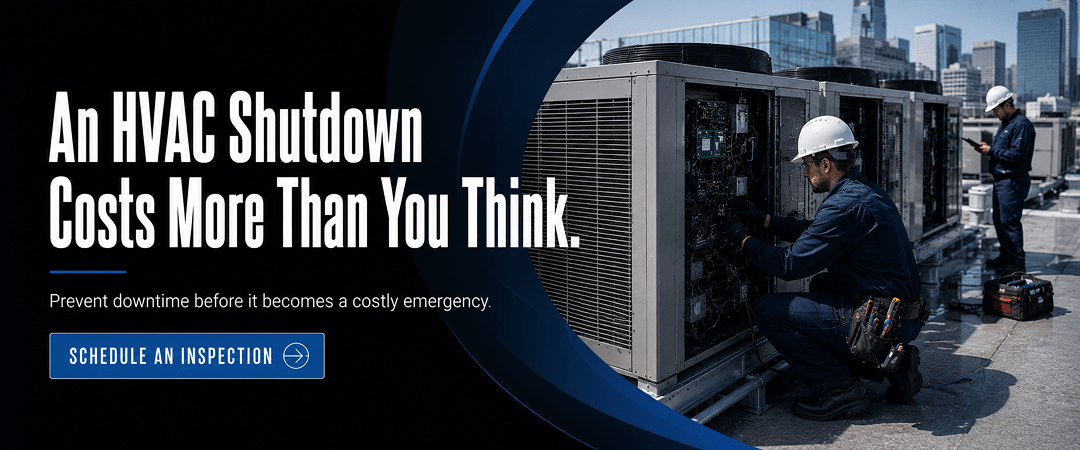
An emergency HVAC shutdown is an expensive affair for commercial buildings. It affects businesses, residents, and even the general vicinity of the site. While such a scenario is completely undesirable, it is critical to understand the implications of such an emergency. This write-up dissects the causes and effects of an HVAC emergency and elaborates on how the damage can be mitigated.
What Causes Emergency HVAC Shutdowns?
Aging Equipment
HVAC systems tend to malfunction as they age, especially if the required HVAC maintenance was neglected.
Lack of Preventive Maintenance
If preventive maintenance is not conducted, minor issues can snowball into major breakdowns that could result in an emergency. Furthermore, it becomes difficult to predict when a breakdown could occur in the future
Electrical and Mechanical Failures
Electrical or mechanical components like the motor, compressor, control panel, sensors, and other parts can malfunction and cause an emergency.
Extreme Weather Conditions
Unseasonal weather changes can put unanticipated stress on the system and cause it to shut down unexpectedly.
The Hidden Costs of an Emergency HVAC Shutdown
- Business Downtime
- Emergency Repair Expenses
- Increased Energy Consumption
- Lost Revenue and Productivity
- Damage to Equipment and Building Assets
- Impact on Occupant Comfort and Safety
- Employee Productivity
- Customer Experience
- Indoor Air Quality Concerns
- Health and Safety Risks
Industries Most Affected by HVAC Shutdowns
- Healthcare Facilities: Hospitals and clinics cannot afford an HVAC emergency since most medical equipment is sensitive to environmental conditions.
- Commercial Offices: Commercial offices see a drop in employee productivity in the wake of an HVAC emergency.
- Retail and Hospitality: These commercial establishments suffer a loss of customers due to uncomfortable conditions.
- Manufacturing and Warehouses: Warehouses and Manufacturing Units The uninterrupted functioning of warehousing and manufacturing units is directly impacted by an HVAC emergency.
- Educational Institutions: Educational Institutions: An emergency can disrupt the teaching-learning process at educational institutes.
How Preventive HVAC Maintenance Minimizes Downtime
- Routine Inspections: Regular HVAC maintenance helps detect problems at an early stage, which can prevent an emergency.
- Early Problem Detection: Early Detection of Potential Problems Helps Prevent an Emergency and Limits Expenses Associated with It
- Optimized System Performance: Proper HVAC maintenance ensures that the commercial HVAC system runs at peak performance. This is vital, considering the fact that they are used for a long time throughout the year.
- Extending Equipment Lifespan: Proper maintenance can help prolong the lifespan of a commercial HVAC system and, thus, offer better value for money.
Creating an Emergency HVAC Preparedness Plan
- Schedule Regular Maintenance
- Monitor System Performance
- Plan for Equipment Replacement
- Partner with a Reliable Commercial HVAC Provider
Benefits of Proactive HVAC Management
- Lower Operating Costs
- Improved Energy Efficiency
- Increased System Reliability
- Better Regulatory Compliance
Conclusion
While it is difficult to predict when an HVAC emergency would occur, it is possible to prepare ahead of time and prevent it from occurring. It is critical that commercial building owners take up proactive HVAC maintenance and keep track of the performance of HVAC systems. By doing that, it becomes possible to avoid an emergency HVAC shutdown and the expensive aftermath that comes with it. A proactive approach to commercial HVAC maintenance not only helps prevent an emergency but also enhances the energy performance of these systems.