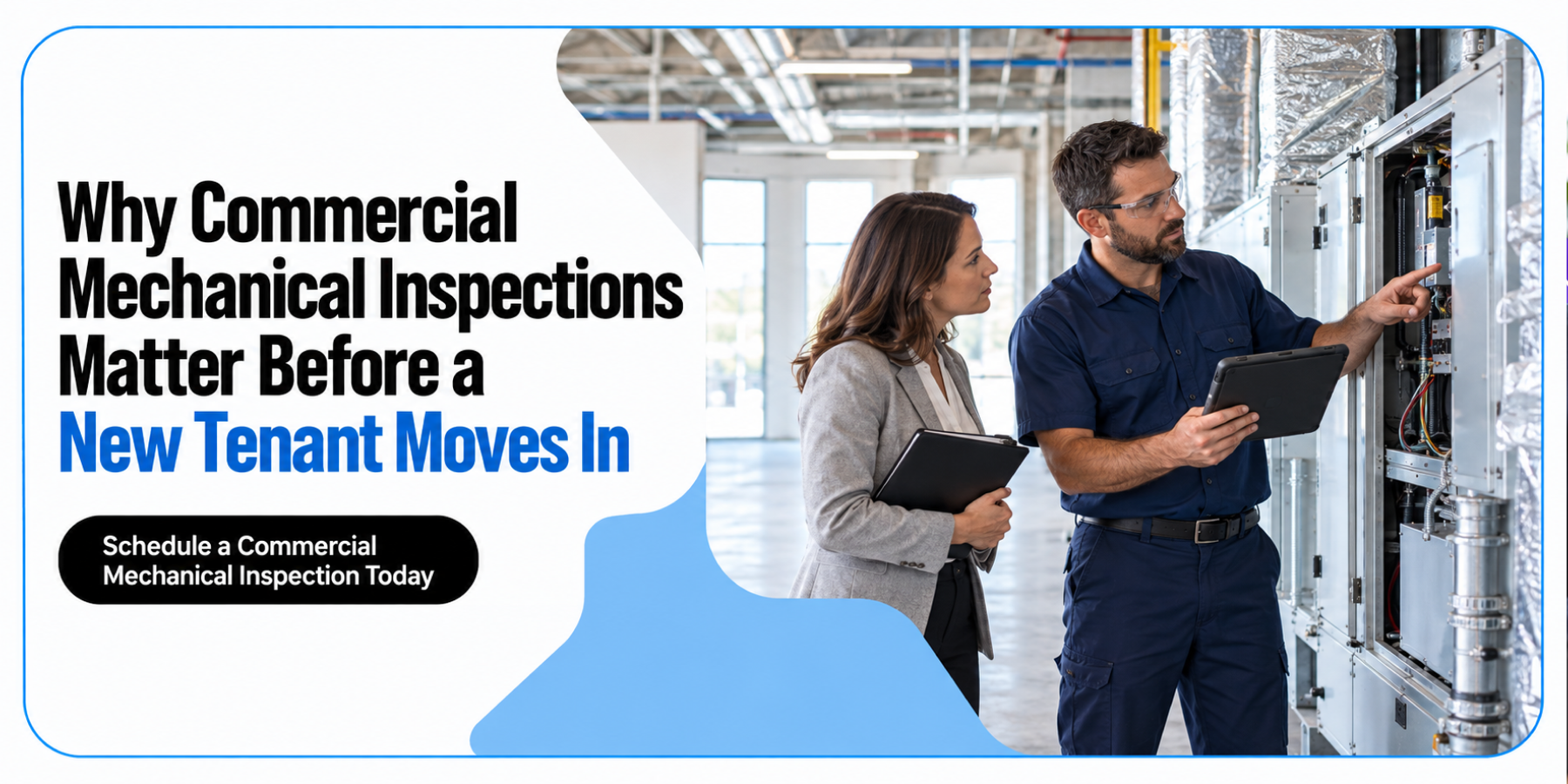
Introduction
Whenever a tenant moves out, property owner tend to focus on cleaning, renovating, interior repairing and much more. The inspection of mechanical system is equally important and should be a priorit
There are components of mechanical systems which may look fine but requires attention. These may include HVAC equipment, plumbing controls, ventilation, and more. The property is not ready until problems like aging outdoor unit, bad airflow, leakage in line, and poor controls are taken care of.
That is why a commercial mechanical system inspection should be part of the tenant turnover process.
Why Inspect Mechanical Systems Between Tenants?
A tenant change creates a useful opportunity to establish the property’s condition before someone new takes possession.
A proper inspection can help property owners and managers:
- Identify developing equipment problems
- Document the condition of major systems
- Address maintenance issues before move-in
- Reduce unexpected breakdowns
- Prepare for upcoming repair or replacement costs
1. Start With a Commercial HVAC Inspection
HVAC is one of the important things that requires inspection before someone moves in.
An experienced technician will assess the condition of HVAC on the basis of type, size, age, usage, and maintenance history.
The inspection may include:
- Filters and airflow
- Evaporator and condenser coils
- Belts, motors, and fans
- Condensate drains and pans
- Electrical components
- Refrigerant-related conditions
- Thermostats and controls
- Unusual noise or vibration
- System performance
- Visible corrosion or damage
A written inspection checklist also creates a useful record instead of relying on a simple “system checked” note.
2. Check Whether the HVAC System Matches the New Tenant
This is particularly important when a commercial space is being converted for a different type of business.
A new tenant could have:
- More employees
- Different operating hours
- Higher equipment loads
- More customers or visitors
- Different ventilation requirements
- More rooms or areas requiring conditioning
The inspection should therefore consider not only whether the equipment works, but whether it can support the property’s expected use.
3. Inspect Plumbing Before Problems Become Visible
Plumbing should also be part of commercial property maintenance before a new tenant moves in.
Look for:
- Leaking faucets or valves
- Slow drains
- Water stains
- Corroded pipes
- Poor drainage
- Water heater issues
- Low or inconsistent water pressure
- Signs of previous water damage
4. Review Controls and Building Automation
The controls should be checked before handover.
Confirm that:
- Thermostats respond correctly.
- Temperature sensors provide reasonable readings.
- HVAC schedules are appropriate.
- Zones respond properly.
- Alarms or recurring faults are investigated.
- Previous tenant settings are removed or updated.
A control problem can sometimes look like an HVAC failure when the actual equipment is functioning normally.
5. Look Beyond the Equipment
A commercial property inspection should not stop at the HVAC unit itself.
Inspect the surrounding mechanical infrastructure too.
This can include:
- Ductwork
- Insulation
- Pipe connections
- Equipment supports
- Access panels
- Condensate lines
- Exhaust and ventilation components
- Signs of moisture
6. Review Maintenance and Repair History
Previous service records can tell you a lot about the condition of a mechanical system.
Before a new tenant moves in, review:
- Previous repair invoices
- Maintenance records
- Equipment age
- Recurring service calls
- Repeated component failures
- Previous inspection reports
- Manufacturer information
- Warranty documentation
Repeated repairs can be a sign that a system needs closer evaluation or lifecycle planning.
7. Create a Repair Priority List
Not every inspection finding needs immediate action.
Separate findings into practical categories:
Urgent:
Faulty components or system that require urgent attention.
Before move-in:
Problem that could possibly affect tenant’s trust and comfort
Monitor:
Small problems that should be monitored but does not require immediate attention.
Future planning:
Components that may require replacement in the coming years.
Hence, commercial property maintenance is now easy to manage. These methods helps in doing action more than reacting.
Identify Your Faucet Type
Before taking the faucet figure out what you’re working with.
Is it a single-handle faucet? Two handles? A cartridge-style design?
Take a photo before removing anything. It makes putting everything back together less confusing.
8. Prepare the HVAC System for the New Tenant
You might wonder, how to prepare HVAC systems for a new commercial tenant?
Begin with this checklist –
A practical turnover checklist:
- Replace or clean appropriate filters.
- Clear condensate drains.
- Inspect coils and airflow.
- Check major mechanical components..
- Test thermostats and controls.
- Review recurring faults.
- Confirm equipment operation
- Document deficiencies.
- Complete necessary repairs.
Conclusion
Conducting a professional commercial mechanical system inspection may help in knowing the minor and major issues that could have negatively impacted the image of property owners. It cancels out the possibility of tenant complaints, emergency repairs, and expensive faults.
The goals is to get the property inspected while the old tenants are still there, not after any new person moves in.