
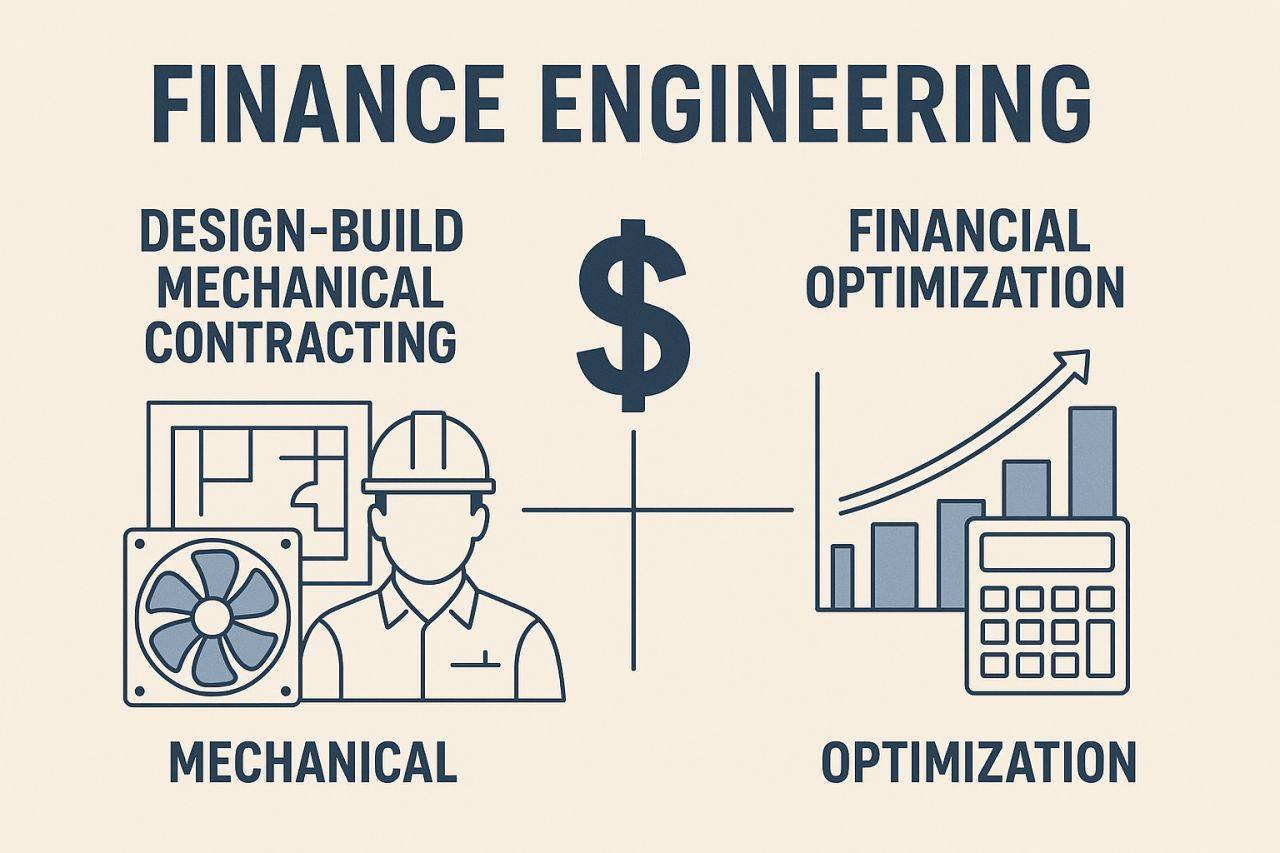
Finance engineering (FinEng): reframing mechanical systems as financial infrastructure
Introduction
Variety of the businesses, organizations and the institutions have been treating the HVAC, building automation, and the mechanical systems as merely the operational expenses for decades. Yet it now the time to understand the value it brings to the table and broaden our horizons with the novel emerging perspective for the finance engineering, which truly recognizes the complexities and worth of the systems as the financial assets they very much are and how they have the direct influence over the profitability exposure to the risks, continuity of the operations, and even the long term value of the enterprise.
What is finance engineering (FinEng)?
Finance engineering essential helps with the application of the financial aptitude or thinking to the physical infrastructures, evaluations of the mechanical systems and not merely via the measure of installation expenses yet rather the impact which they have over the protection of the revenue, overall performance of assets, productiveness and the reliability, efficiency and resilience shown by the business.
Why FinEng matter now
- The inflation reduction act ( IRA ) is actively promoting the incentivization of the energy efficient upgrades
- OBBB opportunities for the permanent depreciation of the bonus
- The exponentially increasing requirements for the ESG as well as decarbonization
- Rise in the costs of utilities and even the expenses pertaining to operations
- The building optimization technologies deeply driven via AI
- Focus shift of the investors to the performance of assets and even the resilience factors
Traditional thinking vs finance engineering
The difference between the two can be best understood by asking these two very essential questions;
The management facilities under the tradition thinking asks: “What is the costs of the systems?” .
Rather the management facilities under the financial engineering asks; “What is that the value systems create financially?”.
Therefore the macroscopic distinction being the prioritization each gives towards the upfront capital costs as compared to the evaluation of the performance ranging over the lifecycles. Financial engineering focuses over the long term value, reduction of the risks, efficiency in terms of operations and even the perennial appreciation of the assets.
HVAC as a financial instrument
- Protects the revenue
- Massive impacts over the occupant productivity
- Helps with the minimization of the energy expenses
- Compliance with the regulations
- Impacts the experiences of the customers
- Marketability of the assets
The financial outcomes framework
Net operating income ( NOI ) impact
The reduction in the redundant consumption of the energy along with the reduced costs of maintenance helps substantially improve the margins of operating and even helps with the increment of the profitability on property.
Compliance risk reduction
The modern systems helps the organization in the circumvention of regulations with pertinence to environment, standards of air quality indoors, as well as the mandates put on sustainability while also reducing the exposure to the penalties as well as the liabilities.
Asset valuation enhancement
Buildings which carry intelligent, energy efficient infrastructures, will often be seen commanding higher amounts of valuations, much stronger demands of tenants, and even much more profound confidence of the investors.
Why mechanical systems should be viewed as financial assets, not expenses
Every single business out there require the systems which support the operations, comfort of the occupants, the quality of air and even the management for energy. Thus, whenever the systems which are in a way the backbones of the business, goes through some sorts of failure, the consequences can be extremely deteriorating especially in terms of the expenses an can also sometimes extend far beyond the costs of repair.
Therefor the mechanical infrastructures have direct consequences over the;
- Continuity of the business
- Productivity and efficiency of employees
- Experiences of the customers
- Compliance over the regulations
- Valuations of assets
The hidden financial impact of building infrastructure
The traditional building often seems to be over prioritizing and fretting too much over the costs presented upfront while also overlooking the overarching economics spread across the lifecycle. Thus the consideration towards the downtimes, inefficiency in the consumption of the energy, emergency repair, and even the failure of the equipment are potent enough to be resulting in the creation of the very much substantial damage and financial liabilities over the time.
Reframing mechanical systems as financial infrastructure
- Infrastructure of HVAC
- Building the automation systems
- Platforms for energy management
- Solutions pertaining to the indoor air quality
- Programs for the preventive maintenance
The rise of data-driven infrastructure finance
- Real time navigation of the performance
- Analytics of the predictive maintenance
- The automate detection of frauds
- Intelligence for optimization of energy
- Forecasting pertaining to the lifecycle performance
The future of FinEng
The futures generations of the buildings are expected to be functioning as the smart and intelligent financial ecosystems, where these infrastructures are continuously involved in the generation of the insights with pertinence operations, optimization of the performance, and even the overall protection of the enterprise value.
Conclusion
The finances engineering perhaps truly challenge the ever standing assumption of how the mechanical systems are merely the outcasted expenses. Which in reality cannot be more fallacious and misguided as the value the systems truly provides, have unmatched value, acting as a strategic financial infrastructure the business benefits extensively via their intersections.
Fill out the form below to know more!