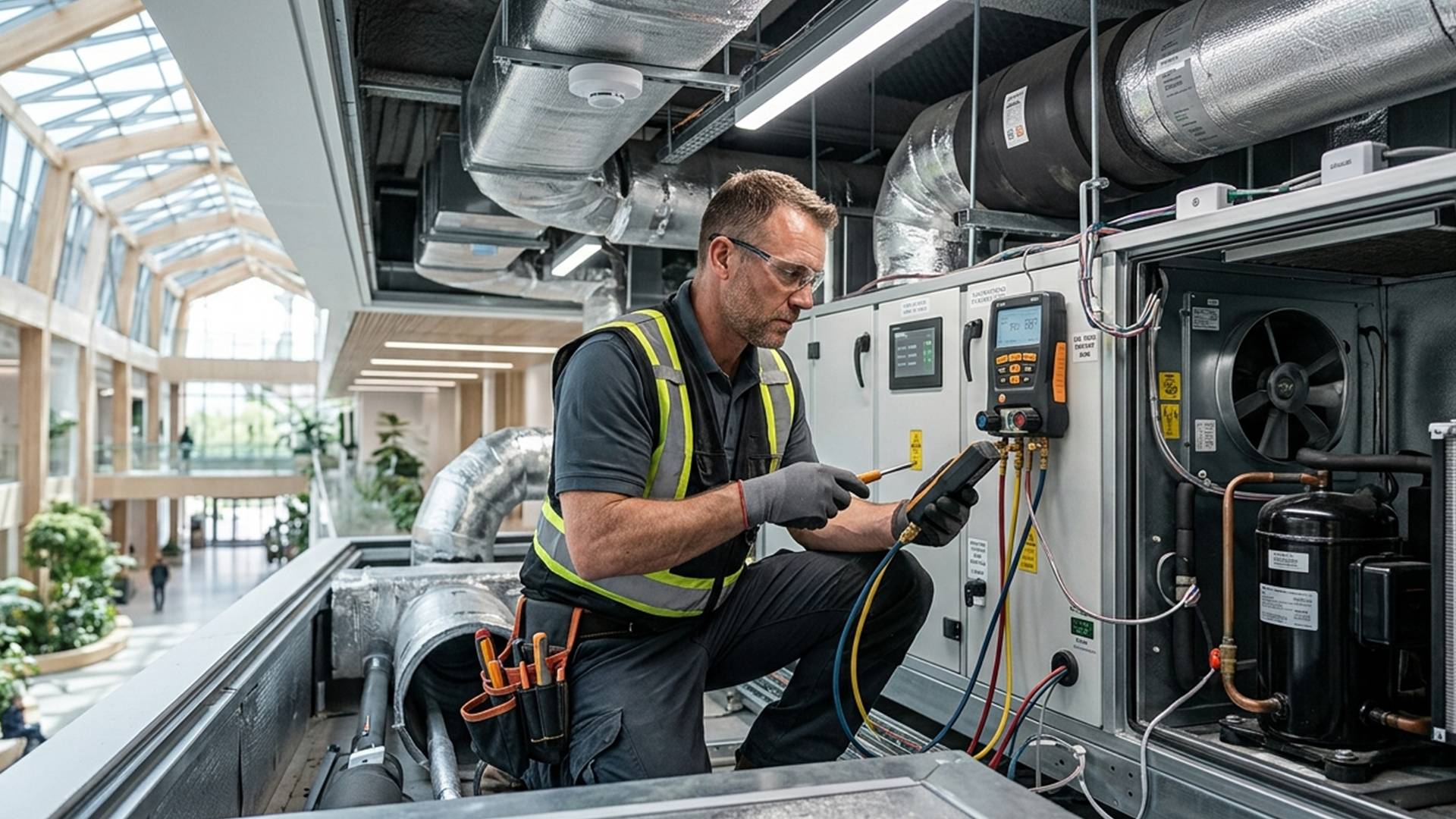
The rise of invisible HVAC: how smart commercial HVAC installation is shaping future buildings
Introduction
The modern day commercial buildings are fast becoming more than just buildings and rather they are evolving into high-tech structures that require cutting-edge HVAC systems. Gone are the days of using air conditioning and heating to simply cool and heat a building.
What “invisible HVAC ” means in modern commercial design
The latest HVAC systems are now integrated into the very fabric of the building itself and are designed to provide the ultimate in comfort whilst also being efficient to run. This is often referred to as ‘invisible HVAC’. The term refers to smart, climate controlled systems that are not only efficient but also provide a high level of comfort to the building’s occupants. They are also designed to be ‘invisible ‘modern in terms of their appearance and operation. Invisible HVAC solutions are integrated climate systems into buildings, that are working efficiently working in a minimal manner in terms of its visual and acoustic impact, and above all with a strong focus on architecture, automation, energy efficiency and user comfort.
The shift toward smart, adaptive HVAC ecosystems
As opposed to the rigid schemes that are restricted to old rules, the modern HVAC systems can immediately new way of HVAC installation is aimed at providing flexible solutions in line with the new ways of using space respond to the changes in the number of people, in outside weather, in required power, etc.
Key innovations transforming commercial HVAC installation
- Sensor-driven climate monitoring
- Ai-powered energy improvement
- Occupancy-based airflow control
- Touchless environmental management
- Silent HVAC engineering
- Smart zoning systems and automated ventilation
HVAC installation & the future of sustainable architecture
Invisible HVAC systems are increasingly part of sustainable building projects in order to reduce energy consumption and enable green building certifications in the long term while reducing the operational cost in the short term.
The role of HVAC in smart buildings & IOT ecosystems
The HVAC system is part of a larger IOT-enabled building network. From a central location, users can manage the various systems of the system can be monitored and optimized in real time, and potential maintenance problems can be predicted.
Commercial spaces leading the invisible HVAC trend
- Smart corporate offices
- Luxury retail environments
- Healthcare facilities
- Green commercial buildings
- Data centres and tech campuses
Why traditional HVAC installation approaches are becoming outdated
Most conventional HVAC systems lack key capabilities to address today’s changing commercial spaces including scalability, energy intelligence and fast response to changing needs with connectivity.
Business benefits of intelligent HVAC installation
- Reduced operational and energy costs
- Enhanced occupant comfort and productivity
- Improved indoor air quality
- Lower maintenance requirements through predictive diagnostics
- Greater sustainability and compliance readiness
Challenges businesses should prepare for
- Higher upfront investment costs
- Integration complexity with smart building systems
- Cybersecurity concerns in connected infrastructure
- Need for specialized installation expertise
Future trends in commercial HVAC infrastructure
The future of HVAC will bring ai-enabled automated heating and cooling systems that instantly optimize energy consumption and continuously maintain the perfect environment. They will form the backbone of fully connected smart buildings that operate in the most efficient and sustainable manner possible.
Conclusion
Invisible HVAC is changing how businesses approach the key commercial building facility, the HVAC infrastructure. The marriage of smart automation, sustainability, and design is currently bringing efficient building solutions to businesses that are investing in smart HVAC today and are designing building environments for the future.