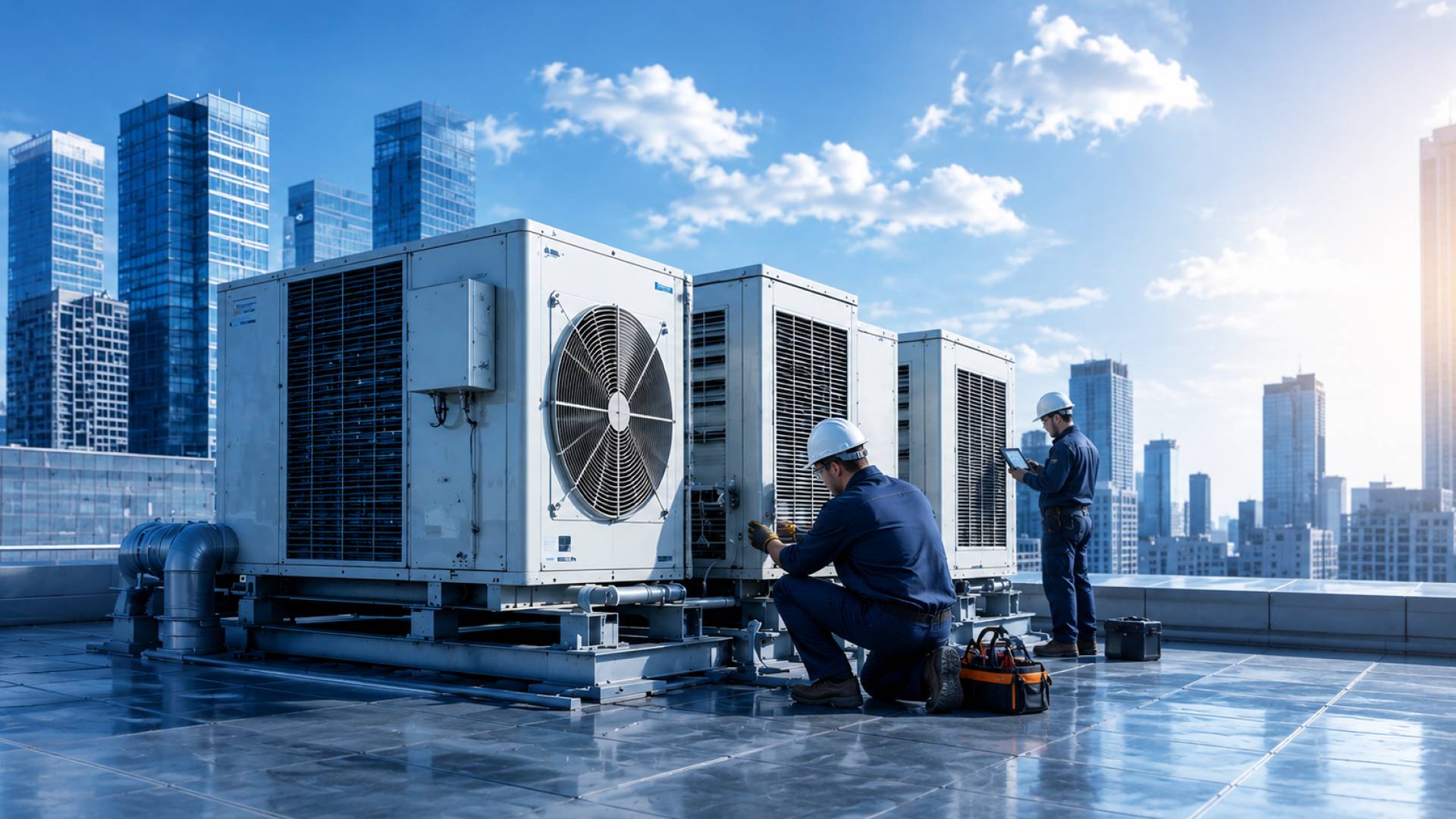
7 HVAC upgrades that can reduce commercial energy costs by 20-30%
Introduction
For many of the commercial facilities, the HVAC systems accounts for about 40 to 60 percent of the overall consumption of energy, hence making up of amongst the largest expenses in terms of operations. This rise in the costs of energy marks as an indicator for the essentiality of the sustainability goals, and having made the right investments in the u[grades for HVAC system have significant impact over the reduction in the costs of operations, while also simultaneously driving comfort, reliability as well as the performance efficiency.
Upgrade to high efficiency HVAC equipment
Why it matters
The HVAC systems which are aging often seems to be operating in much below the standards of the modern efficiency.
Key benefits
- Reduction in the consumption of energy
- Improvement of overall reliability
- Lowered costs of maintenance
- Enhancement of the comfort of occupants
Energy savings potential
Up to 20 percent of the energy is reduced as opposed to the equipment which have been outdated.
Best for
It is perhaps the best suited for the buildings with the HVAC systems that are older than 10 to 15 years.
Install variable frequency drives (VFDS)
What are VFDS
The variable frequency drives help in the regulation of the speed of motor on the basis of the actual demands rather than the full capacity operations on a continuous basis.
Applications
- Fans
- Pumps
- Units for air handling
Benefits
- Lowered usage of energy
- Substantial reduction in the wear and tear of the equipment
- Improvement of the control of system
Energy savings potential
About 15 to 30 percent of the savings over the systems which are motor driven.
Implement smart building automation controls
Why smart controls matter
The reason for why it is extremely essential to incorporate smart control is because the traditional systems often seem to heating and cooling regardless of the occupancy and even the demands.
Features include
- The sensors for occupancy
- Automating the scheduling
- Monitoring remotely
- Optimization in real time
Benefits
The primary benefits comprises of the improvement in terms of efficiency, comfort, as well as the overall operational visibility.
Energy savings potential
The overarching energy saving potential equates to about 10 to 25 percent.
Upgrade to demand-controlled ventilation (DCV)
What is DCV?
The demand control ventilation helps in the adjustment of the levels of ventilation in accordance with the occupancy as well as the overall quality of the air indoor and the condition of the circumventing environment.
Common applications
The common applications are majorly in the offices, the schools and other educational platforms, meeting spaces and even the facilities pertaining to retail.
Benefits
The befits includes the maintenance of the indoor spaces which are much more healthier, while also simultaneously adding to the reduction the ventilation expenses which are unnecessary in nature.
Energy savings potential
The energy saving potential adds up to 10 to 20 percent.
Install energy recovery ventilation (ERV) systems
How ERV’s work
The energy recovery ventilation systems helps in the transference of the heat as well as the moisture form the air systems which are incoming to the ones that are outgoing and adds up to the overall reduction the workload over HVAC systems.
Advantages
- The lowered loads of heating as well as cooling
- Improvement the efficiency of ventilation
- Betterment of the comfort indoors
Ideal for
It is the best suitable for the buildings which require the air intake to be fresh and clean extensively.
Energy savings potential
The overall saving potentials pf the energy comprises to 15 percent to as much as 40 percent.
Optimize HVAC zoning and air distribution
The problem
The are many of the buildings which are conditioned to the unoccupied and are unnecessarily also resulting in the energy wastage.
Zoning solutions
The independency of the temperature control for the distinct areas which are based over the patterns of usage as well as the occupancy.
Benefits
- Much greater control;
- Improvement in terms of the efficiency
- Reductio on the expenses of operations
Energy savings potential
The saving of the energy can be in between the spectrum of about 10 to 30 percent.
Add continuous HVAC monitoring and predictive maintenance
Why monitoring matters
The reasons monitoring is extremely essential essential for the faults which the hidden and often cause the systems to have inefficiency in terms of operations and even extended periods.
Monitoring technologies
- IoT sensors
- The analytics which are driven via AI
- Management systems for the buildings
- The automated detection of faults
Benefits
The identification of the issues is one of the most integral aspects, along with also the improvement of reliability and even the optimization of the performances.
Energy savings potential
The potential for energy saving is about 5 to 15 percent.
HVAC upgrades that may qualify for incentives and tax benefits
Potential financial incentives
Businesses may be qualified of the rebate of utility, the grants of the efficiency of energy, inflation reduction act aka IRA incentives and even the acceleration of the depreciation of the opportunities.
Why it matters
The reasons which accounts to its importances is because of the prospects the programs have to reduce the expense of the projects and even improve the rates of investment.
Conclusion
The reduction of the energy costs commercially is extremely essential as it demands not just routinely maintenance but rather the strategic modernization. Equipment which are high in efficiency, variable frequency drives ( VFD ), smart controls, demand control ventilation ( DCV ), energy recovery ventilation ( ERV ), zoning improvements and even the predictive maintenance contributes collectively in the reduction of the energy expense by about a 20 to 30 percentage, while also having the comfort improved, more sustainability and also the building performance that is long term in nature.