Understanding Emergency HVAC Service Calls
Common Reasons for Emergency HVAC Failures
Most emergency HVAC failures are caused by neglected maintenance, rather than equipment defects. The blockage of filters and coils, the refrigerant gas leak, a faulty belt, short circuits, and a faulty compressor can all cause unexpected system damage.
The True Cost of HVAC Emergencies
Not only is the cost of emergency repairs high, but malfunctioning systems cause discomfort, extra power consumption, and equipment damage that may be difficult to notice
What Is Preventive HVAC Maintenance?
Definition
Preventive maintenance is regular inspection and servicing of equipment to detect problems that require urgent attention.
Typical Preventive Maintenance Tasks
Common preventive maintenance services include:
- Filter cleaning or replacement.
- Cleaning coils.
- Checking the refrigerant levels.
- Testing and inspecting electrical components.
- Checking the belt, motor, and thermostat.
Why Preventive Maintenance Reduces Emergency Calls
- Early Detection of Problems,
- Improved System Efficiency
- Prevention of Peak-Season Failures
- Reduced Wear and Tear
The Components Most Likely to Cause Emergency Breakdowns
- Compressors
- Electrical Systems
- Airflow Components
- Refrigeration Components
Real-World Impact: How Maintenance Can Reduce Emergency Calls by Up to 70%
Industry Findings and Trends
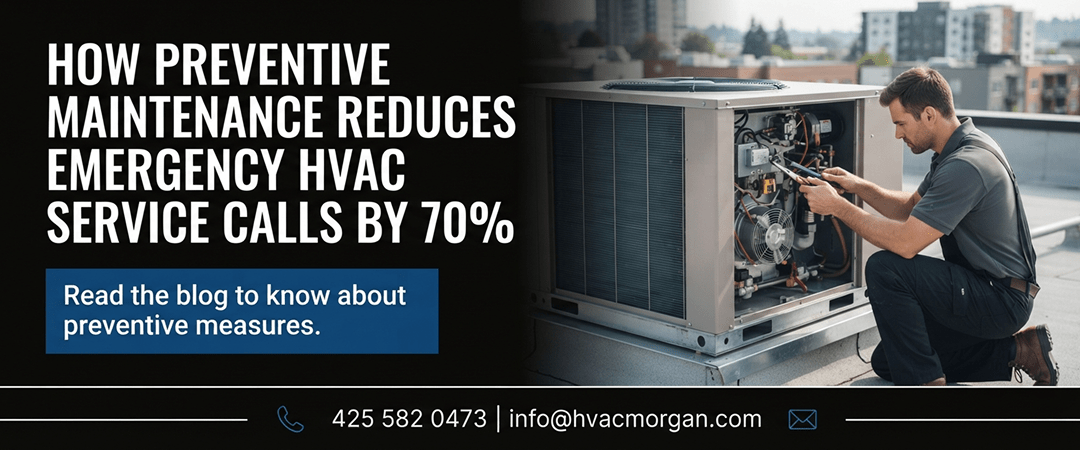
Industry Findings and TrenIndustry studies show that proper preventive maintenance can reduce emergency service calls by up to 70% or more. In addition, it can help to enhance the performance of the equipment.
Example Scenario
While Company A continued to experience repeated emergency service calls and paid higher bills due to lack of preventive maintenance, Company B decided to develop a preventive maintenance plan. As a result, Company B was able to lower service costs while also ensuring that its equipment was operating at its maximum efficiency.
Additional Benefits Beyond Fewer Emergency Repairs
- Lower Energy Costs
- Longer Equipment Lifespan
- Improved Indoor Air Quality
- Better Regulatory Compliance
Signs Your Building Needs a Preventive Maintenance Program
Warning Signs
Some warning signs that a building needs a preventive maintenance program include: frequent repairs and complaints about the temperature of a room, higher-than-typical energy bills, unusual sounds coming from HVAC equipment, and reduced air flow.
What a Commercial HVAC Maintenance Plan Should Include
Recommended Maintenance Schedule
A maintenance plan should be developed based on a semi-annual inspection, including tune-up services, and continued monitoring of the equipment.
Key Deliverables
A commercial building maintenance plan should also consist of cleaning, inspecting, and testing components, as well as analysing the results and recommending further maintenance.
Why Businesses in Washington Should Prioritize Preventive HVAC Maintenance
Local Challenges
Preventive maintenance is critical to the efficient operation of commercial HVAC systems. This is because the state experiences all kinds of weather throughout the year. As a result, a lot of stress is placed on heating and air conditioning equipment.
Industries That Benefit Most
Most industries in Washington State can benefit from a preventive maintenance program. This is especially true for the healthcare, education, manufacturing, and hotel industries. In addition, the retail and restaurant sectors can benefit from reduced energy bills and improved equipment performance.
Conclusion
Preventive maintenance is a vital component in the control and management of commercial HVAC systems. Therefore, all business owners in Washington State should consider investing in preventive maintenance programs. Not only will such programs save them a lot of money, but they will also enable them to maintain healthy working conditions and provide uninterrupted services to their customers.