Introduction
It is frustrating to experience heating system failure in the bitter winters. When the temperature reaches minus zero degrees, the fault in heating system can be make your home uncomfortable.
The good part is, not every heating system failure indicates replacement of the heating system. At times, the problem are simple enough to solve on your own or require hiring a professional help. This blog tells you what to do if your heating systems fails during winters.
1. Check the Thermostat First
Before assuming there is a major problem, check your thermostat.
Make sure:
- The mode is set to Heat
- The temperature is set above the current room temperature
- The fan is set to Auto
- The thermostat has working batteries, if applicable
A thermostat setting or power issue can sometimes make it appear that the entire heating system has failed.
2. Check the Power Supply
If the system suddenly stops check if there is a power cut off. Check the electricity panels in home, and look if the breaker has tripped. Also, consider checking the furnace power switch located near the unit.
If you experience frequent tripping, don’t leave the switch turned on. Frequency in breaker tripping can indicate an issue with electricity components and or equipment of the system. It may require professional help for on point diagnosis and solutions.
3. Inspect the Air Filter
A dirty filter is an easy problem to overlook.
When a filter becomes heavily clogged, airflow is restricted. This can make the system work harder and may cause it to overheat and shut down through its safety controls.
Replace the filter with correct size and type.
4. Look for Obvious Warning Signs
Take a quick look around the heating equipment.
Check for:
- Strange or unusually loud noises
- Burning or unusual odors
- Water around the unit
- Poor airflow from vents
- Repeated starting and stopping
- Error codes on the equipment
Don’t attempt to repair electrical, gas, ignition or internal mechanical components yourself.
5. Treat Gas or Carbon Monoxide Concerns as an Emergency
If you suspect a gas leakage, do not attempt to touch electrical components or the part that is releasing the gas. Leave the area and call for emergency help.
Likewise, if you hear carbon monoxide alarms buzzing, seek shelter in a safer place and call for help.
6. Keep Your Home Warm While Waiting for Help
If you’re unable to revive the heating system then prioritize the comfort of occupied areas of your home.
Close all the openings like doors, windows, and ducts. Temporary weather sealing and heavy curtains may trap the heat inside the home. The U.S. Department of Energy recommends some measures like insulation, weather-stripping, and window coverings that lower the chances of heat loss.
Avoid using ovens, grills or other appliances as a substitute for home heating. They aren’t designed to safely heat a living space.
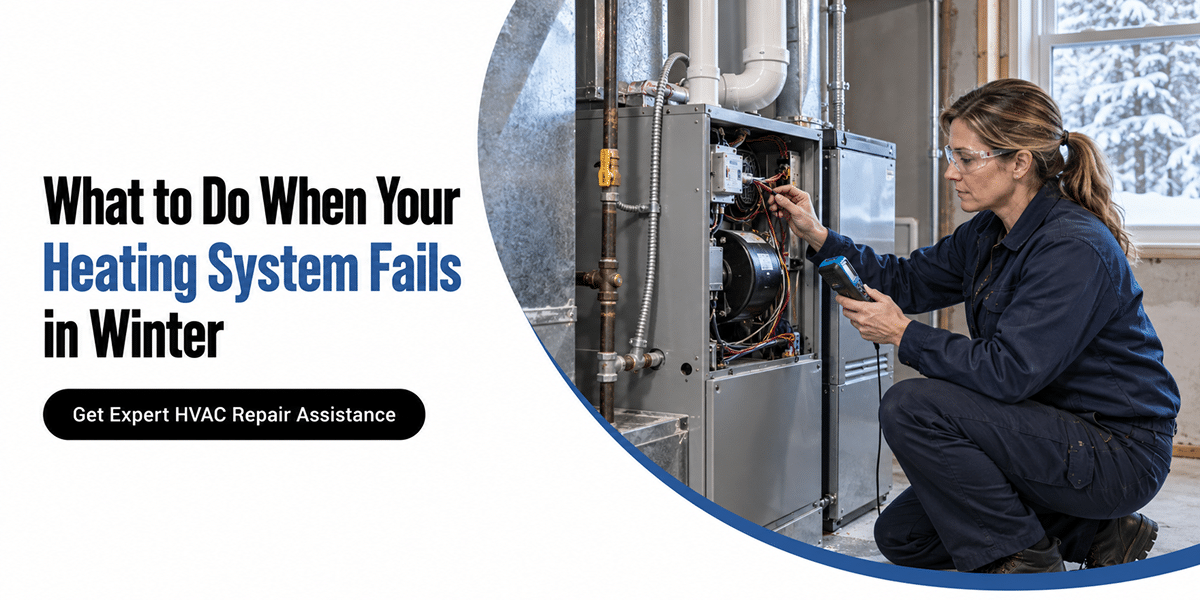
7. Call an HVAC Professional
If the basic checks don’t solve the problem, it’s time for professional service.
A professional HVAC technician can inspect the actual cause behind heating system failure. The skilled professionals have years of experience, as a result they can tell if the issue is related to electricity parts, ignition, regulators, airflow, motorz or fuel supply.
If you are experiencing frequent shut down of heating system, then professional help is the smartest choice to make.
Repair or Replacement? Know the Difference
It is important to know that after system failure, you are supposed to replace or repair the system.
Consider:
Repair may make sense when:
- The system is relatively young
- The problem is isolated
- Repair costs are reasonable
- The equipment has otherwise performed reliably
Replacement may be worth considering when:
- The system is older
- Repairs are becoming frequent
- Energy bills are increasing
- A major component has failed
- The system struggles to heat the home evenly
ENERGY STAR notes that furnaces over 15 years old, frequent repair needs and rising energy costs can be signs that replacement should be considered.
HVAC Repair vs Replacement Cost Comparison
Never compare the one time repair price with the price of the new system. Must consider the expected upcoming repairs, lifespan of components, energy bills, efficiency of systems, and more.
Today’s inexpensive repair cost may not be the practical option if you expect a major failure in your system.
On the other hand, replacing a system that needs only a minor repair may be unnecessary.
Conclusion
It is important to know the precautions and steps to take when you are experiencing a heating system failure during bitter cold weather. It can help identify the problem beforehand. Keep regular check on thermostat, filters, and other components before winter arive.
If your heating system is not working even after the basic and simple checks, then professional HVAC help is all you need. The professionals will identify the problem and suggest the relevant solution that makes it easier to decide whether you should go for repair or replacement.