
Introduction
The coil of your HVAC system bears excessive load but it does not get the spotlight much
With usage, the coil can become dirty, dusty, and can catch other foreign particles. When it gets dirty the system requires more power to function the heat. It usually results in slow airflow, high electricity bills, uneven cooling, and longer cycles.
The good news? Basic coil maintenance isn’t complicated. However, there is a very fine line between basic cleaning and overall HVAC repairing.
This blog tell you how to keep the coils working and in good condition by leveraging proper maintenance.
Why Coil Maintenance Matters
Usually, air conditioners have two main coils:
- Evaporator coil: It is located inside of the system and functions to absorb heat from indoor air.
- Condenser coil: Located outside and releases that heat.
Both coils need good airflow space and require clean areas to function properly.
If the coil is dirty, it will draw more power to work and will reduce the heat transfer. Over time, that extra workload can affect efficiency and equipment life.
1. Turn Off the System First
This sounds obvious, but it is the step people sometimes rush.
Before cleaning or inspecting a coil:
- Turn off the HVAC system.
- Shut off power according to the manufacturer’s instructions.
- Let the equipment cool down if it has been running.
- Do not touch or operate electricity components with system in running condition.
2. Keep the Outdoor Coil Area Clear
You don’t always need to open the outdoor unit to help maintain the condenser coil.
Start with the area around it.
Remove:
- Leaves
- Grass clippings
- Twigs
- Dirt
- Other loose debris
Also keep plants and shrubs from crowding the unit.
It looks like a common task, but it does prevents any debris from making up space near the coils.
3. Gently Clean the Outdoor Coil
If you notice very little dirt or dust in the outdoor condenser coil then gentle cleaning may work well.
To clean the coil from the outside, a garden hose may be required.
But avoid:
- Pressure washers
- Jet settings
- Aggressive scrubbing
- Bending the aluminum fins
Those fins are surprisingly delicate. Too much water pressure can bend them and restrict airflow.
4. Be Careful With Coil Cleaners
Not every household cleaning product should be applied to clean the coil.
If cleaning require a solution or cleaner, then consider using a cleaner only designed to clean HVAC coils by following the instructions of the same.
Avoid:
- Harsh chemicals
- Acidic cleaners
- Abrasive pads
- Unapproved household chemicals
The wrong product can corrode the coil or damage the fins. (Carrier)
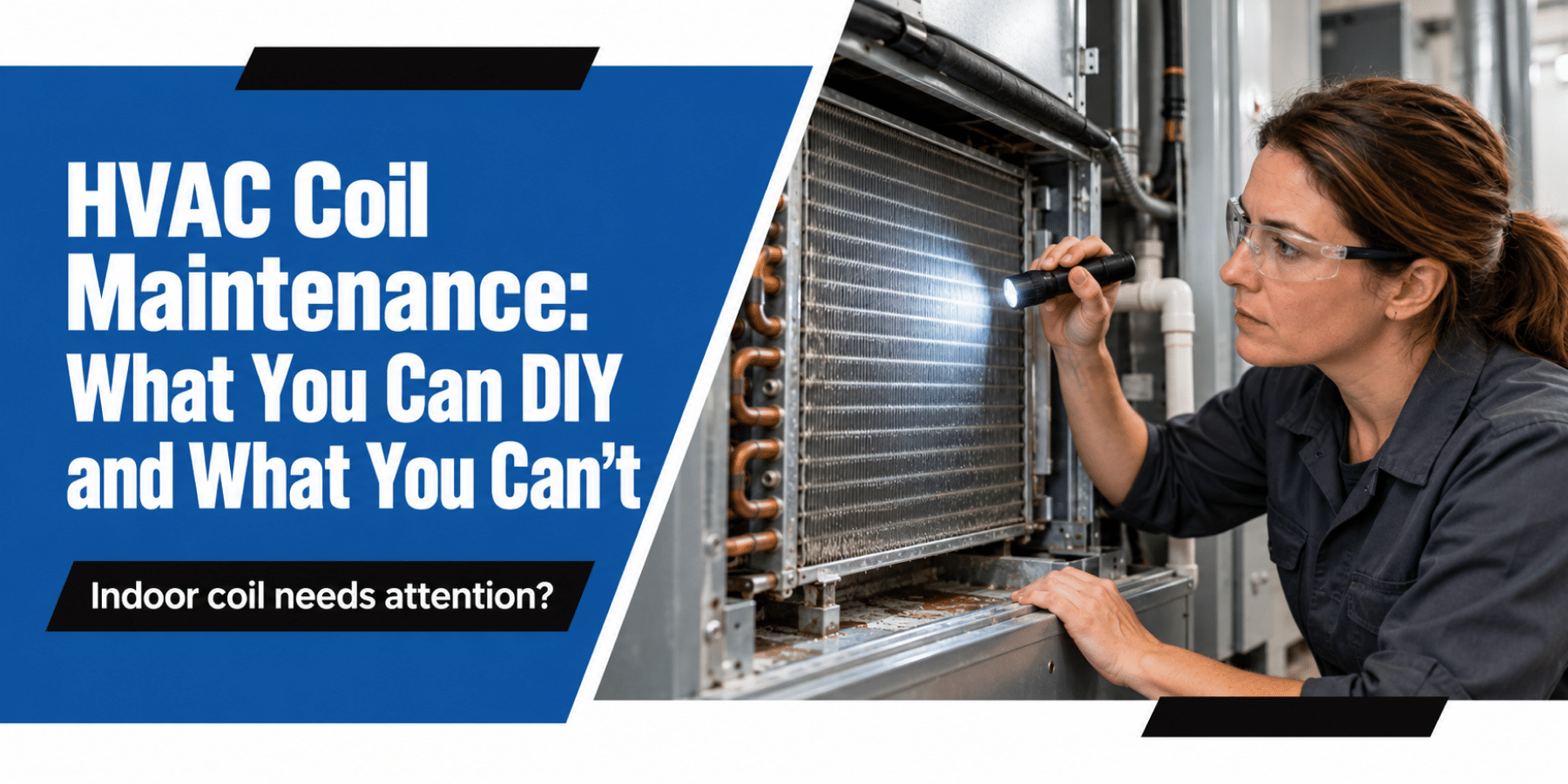
5. Don’t Forget the Evaporator Coil
It is very difficult to get your hands on indoor evaporator coil. It requires more attention and carefulness.
It may be located inside the air handler or furnace cabinet. Opening the equipment can expose electrical components and other parts that are not meant for casual DIY work.
It is located inside the HVAC system where you will see electric components. It is not at all safe to do DIY experiments with such parts of the machinery. Hence, it is advised to call for professional help.
An HVAC technician will check the coil for:
- Heavy dirt buildup
- Corrosion
- Refrigerant leaks
- Damaged fins
- Drainage problems
6. Keep the Air Filter Clean
Coil maintenance doesn’t start at the coil.
If you have dirt in air filter, it will circulate dusty air through the system. It will also result in dirty evaporator coil.
It is important to check and replace the air filters on regular basis.
If the filter looks clogged and dirty, waiting for next maintenance plan is no good choice. Replace it.
Regular filter changes are one of the easiest ways to reduce dirt reaching the indoor coil.
7. Check for Warning Signs
The HVAC system often provide warning signs that you must never ignore:
Watch for:
- Weak airflow
- AC blowing warm air
- Longer cooling cycles
- Unexpected increases in energy bills
- Ice forming on the coil
- Water around the indoor unit
- Unusual system performance
When Should You Call an HVAC Professional?
Some maintenance is perfectly reasonable to handle around the outside of the unit.
But stop and call a professional if you notice:
- Heavy build-up on the indoor coil
- Bent or damaged fins
- Refrigerant or oil around the coil
- Repeated coil freezing
- Water leaking from the system
- Electrical problems
- Poor cooling after cleaning
Conclusion
Conducting the coil maintenance does not require open the HVAC system apart and doing things wrong way.
Focus on basics by keeping the outdoor unit clean by gently rinsing the dust off, replacing the filters timely, and keeping an eye on overall performance.
As for indoor units, leave the work to certified HVAC technicians who will do the required work.
Basic maintenance of coil can help your system work smoothly and prevent any problems from becoming an HVAC emergency.