Introduction
When your water bills suddenly increase it may be because of heavy usage, seasonal changes, and occupied buildings. But when you get a clear overview of commercial water consumption, it is important to inspect the plumber system.
Here are eight commercial plumbing problems worth investigating when your water bill suddenly increases.
1. Hidden Pipe Leaks
Not every leak happens where you can see it.
A damaged supply line behind a wall, underneath a floor, or below the building can continue leaking while the business operates normally.
Look for:
- Damp or discoloured walls
- Water stains on ceilings
- Musty smells
- Unexpectedly wet flooring
- Mold or mildew
- Areas of unexplained moisture
These are classic signs that water may be escaping somewhere within the building.
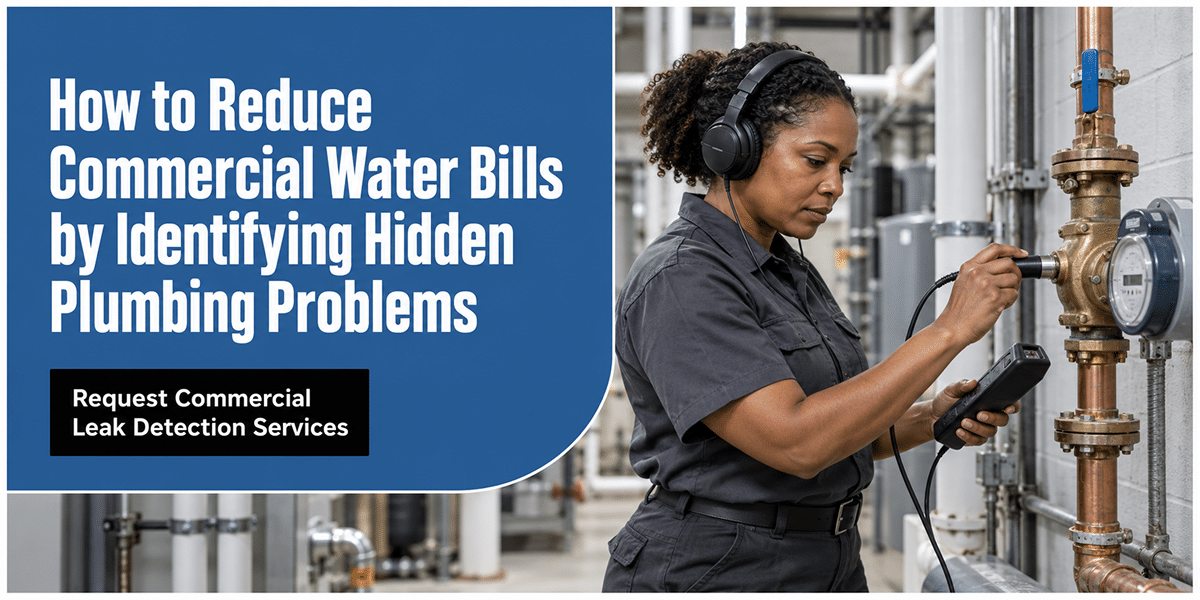
Professional commercial water leak detection can help locate leaks that are difficult to identify through a basic visual inspection.
2. Toilets That Keep Running
While commercial plumbing inspection is running, our skilled technicians will check restrooms for:
- Toilets that continue running after flushing
- Weak or incomplete flushing
- Faulty flush valves
- Leaking connections
- Malfunctioning automatic sensors
- Urinals that do not shut off properly
The EPA specifically identifies continuously flushing or leaking sanitary fixtures as sources of unnecessary water consumption.
3. Leaking Faucets and Fixtures
Coils usually transfer the heat.
A dripping faucet may seem too minor to explain a high commercial water bill.
But a commercial building can have dozens of sinks and fixtures, and small leaks can continue around the clock.
Check:
- Restroom faucets
- Kitchen sinks
- Utility sinks
- Hose connections
- Shower fixtures
- Outdoor faucets
Also inspect underneath sinks. A supply connection or drain fitting can leak without being immediately visible from above.
4. Underground or Exterior Water Line Leaks
If indoor fixtures appear normal but your meter shows unexplained water use, look beyond the building.
Underground distribution lines can develop leaks because of:
- Pipe deterioration
- Corrosion
- Ground movement
- Damaged connections
- Root intrusion
- Previous installation problems
5. Faulty Valves and Pressure Problems
During the inspection, must check the following:
- Main shutoff valves
- Fixture shutoff valves
- Pressure-reducing valves
- Backflow prevention equipment
- Automatic control valves
- Connections around high-use equipment
If pressure has changed recently, don’t simply adjust fixtures individually. The underlying plumbing system may need to be investigated.
6. Water-Using Equipment Is Malfunctioning
Your building’s plumbing bill isn’t necessarily being caused by traditional fixtures.
Commercial facilities often have equipment that uses significant amounts of water, including:
- Cooling towers
- Boilers
- Irrigation systems
- Commercial dishwashers
- Water treatment equipment
- Process equipment
A stuck valve, failed control, or malfunctioning component can cause equipment to consume water continuously.
Submeters can be particularly useful for identifying which equipment or building area is responsible for an unexpected increase.
7. Drainage Problems Can Point to Larger Plumbing Issues
When drain clogs frequently, it may indicate:
- Grease accumulation
- Sediment buildup
- Damaged drain lines
- Poor drainage
- Root intrusion
- Improperly sized pipes
8. Irrigation or Outdoor Plumbing Leaks
Check:
- Broken sprinkler heads
- Damaged underground irrigation lines
- Stuck irrigation valves
- Leaking hose bibs
- Incorrect watering schedules
- Overspray or excessive runoff
Outdoor water use can be especially easy to overlook because the problem may occur after business hours.
How to Investigate a Sudden Increase in Water Consumption
Check the following:
1. Compare monthly usage
Measure and calculate it in gallons or cubic metres, not only the dollar value.
2. Compare the same month last year
Seasonal changes can naturally affect water consumption.
3. Check the meter
When practical, shut down water-using activities and observe whether the meter continues registering usage. An unexplained change can indicate a leak.
4. Review occupancy
More employees, customers, tenants, or operating hours can naturally increase consumption.
5. Check maintenance records
Look for recent plumbing repairs, equipment changes, or recurring problems.
6. Inspect high-use areas
Get started with kitchens, bathrooms, mechanical rooms etc.
When Should You Schedule a Commercial Plumbing Inspection?
A professional commercial plumbing inspection can examine the property’s:
- Supply lines
- Fixtures
- Valves
- Drainage
- Water heaters
- Backflow equipment
- Visible piping
- Water-using equipment
- Irrigation connections
For persistent or difficult-to-locate leaks, specialized leak detection may be necessary.
Conclusion
An unexpected increase in your commercial water bill should not automatically be treated as a billing issue or normal increase in usage.
It is important to consider inspecting the plumbing system.
Usually small problem quietly results in higher bills. Because these problems are tend to be ignored by the property owners. Whenever you notice leakage in toilets, faulty equipment and irrigation failure, do not ignore it because these same problem increases the commercial water consumption.