Introduction
A commercial HVAC maintenance should cover more than few here and there check ups.
The commercial HVAC units are persistent in working for long hours throughout the year. They are designed to serve large spaces with heavy usage.
A detailed commercial HVAC maintenance must include the following:
- Inspection
- Cleaning
- Testing
- Adjustment
- Documentation
Why a Proper Maintenance Visit Matters
Frequent maintenance keeps the facility team updated with system performance and loopholes.
A good visit can help:
- Identify worn components early
- Maintain reliable heating and cooling
- Improve airflow
- Reduce avoidable energy waste
- Catch drainage and electrical issues
- Reduce unexpected breakdowns
- Create a useful equipment history
What Should a Commercial HVAC Maintenance Visit Actually Include?
Here is what should a commercial HVAC maintenance visit actually include:
1. Review the System Before Starting
A technician should first understand what has happened since the previous visit.
This means reviewing:
- Previous service reports
- Recurring problems
- Repair history
- Tenant or occupant complaints
- Equipment alarms
- Unusual energy consumption
- Previous recommendations
2. Inspect Filters and Airflow
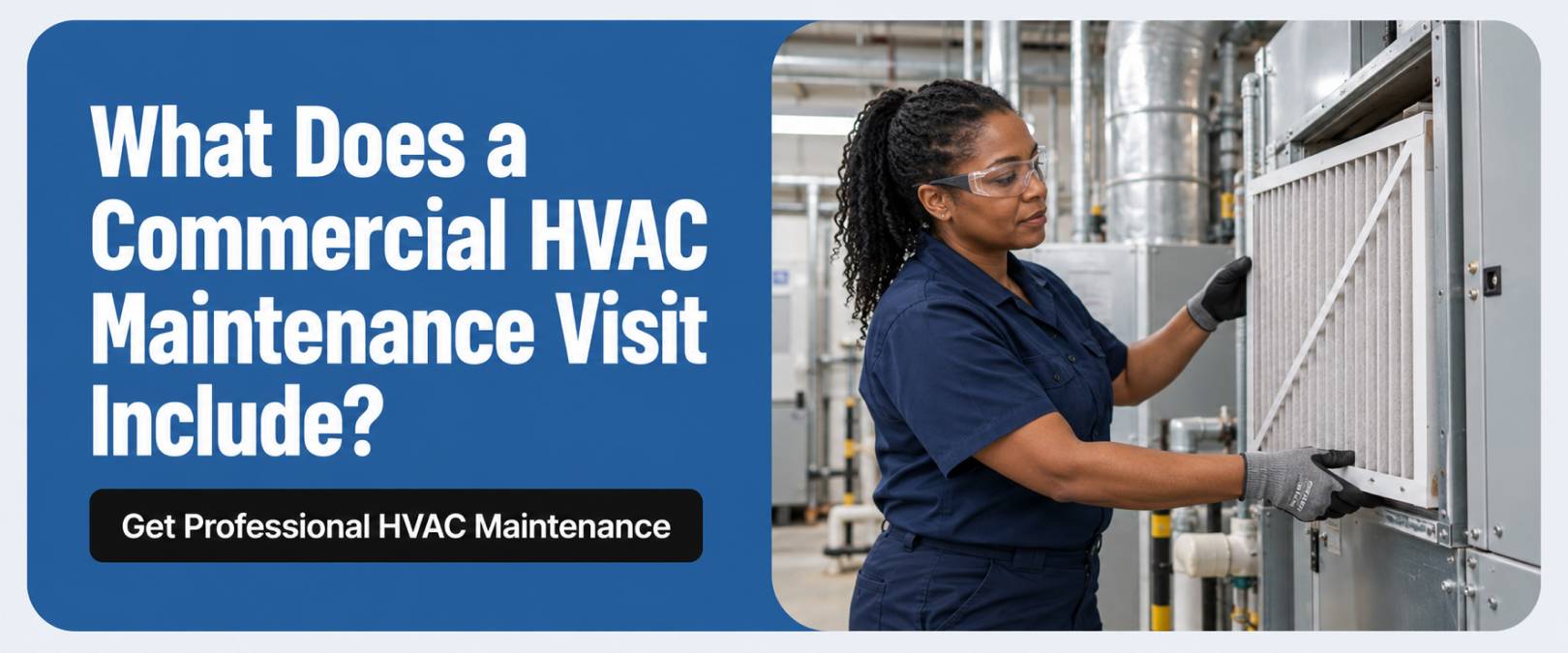
A professional technician is always required to check dirty filters which could restrict airflow.
The inspection may include:
- Filter condition
- Blower operation
- Supply and return airflow
- Duct connections
- Obstructions
- Static pressure
- Damaged or loose components
ENERGY STAR notes that airflow problems can reduce system efficiency, while proper blower and filter maintenance supports better operation.
3. Check Coils and Heat Transfer Components
If the coils are dirty, it will require HVAC system to draw excessive load to operate.
A commercial HVAC service visit may include the inspection and cleaning of the following:
- Evaporator coils
- Condenser coils
- Heat exchangers
- Coil fins
- Surrounding areas
The coils don’t necessarily need deep cleaning at every visit. Their condition should determine what work is appropriate.
Trane’s commercial equipment guidance recommends inspecting condenser coils, electrical components, filters, drains, duct connections, and other components as part of seasonal maintenance.
4. Inspect Electrical Components
Electrical problems can affect both equipment reliability and safety.
A technician may inspect:
- Electrical connections
- Wiring
- Contactors
- Capacitors
- Motors
- Disconnects
- Control panels
- Voltage and current readings
Loose electrical connections can create operating problems and contribute to premature component failure.
Electrical work should be performed by appropriately qualified personnel.
5. Check Motors, Belts and Moving Parts
Mechanical components experience wear every time the HVAC system operates.
The technician should look for:
- Belt cracks or excessive wear
- Incorrect belt tension
- Bearing issues
- Motor noise
- Vibration
- Lubrication requirements
- Fan and blower condition
6. Inspect Condensate Drains and Pans
Condensation is considered normal in such heavy systems. But if you notice that water is not draining properly then it is something that requires attention.
A maintenance visit should check:
- Condensate drain lines
- Drain pans
- Drain traps
- Condensate pumps, where installed
- Signs of standing water
- Blockages or buildup
- Rust or damage
A blocked condensate drain can contribute to water damage and affect system operation.
7. Test Thermostats and Controls
A commercial HVAC system can have perfectly healthy mechanical components and still perform poorly because of control problems.
The technician should check:
- Thermostat operation
- Temperature readings
- Setpoints
- Operating schedules
- Sensors
- Dampers
- Actuators
- Building automation controls
- System alarms
For larger buildings, reviewing schedules and equipment sequencing can be especially important. ENERGY STAR recommends periodically reviewing HVAC schedules, setpoints, and tenant-use requirements as part of operations and maintenance.
8. Check Refrigerant-Related Parts
For applicable cooling systems, refrigerant performance should be evaluated.
A technician may check:
- Refrigerant-related operating readings
- Refrigerant lines
- Signs of leakage
- Coil temperatures
- System performance
Simply adding refrigerant without investigating why levels are low is not a complete maintenance strategy.
Refrigerant-related work should be handled by qualified professionals following applicable requirements.
9. Inspect Ductwork and Ventilation
The equipment may be operating correctly while conditioned air is being lost before it reaches occupied areas.
A commercial HVAC maintenance checklist for technicians should consider:
- Duct connections
- Visible leaks
- Damaged insulation
- Outdoor-air components
- Dampers
- Exhaust systems
- Ventilation airflow
For commercial buildings, ventilation maintenance can also involve inspecting outdoor-air intakes, dampers, drain pans, filters, and other components according to the system and applicable requirements.
10. Test the System Under Operation
The experts must inspect the system while it is still in running condition to check how it starts, functions and shuts off.
This inspection may involve checking:
- Heating or cooling operation
- Supply and return temperatures
- Airflow
- System controls
- Equipment sequencing
- Unusual noise or vibration
- Safety controls
- Overall operating performance
This helps turn a checklist into an actual performance assessment.
11. Document What Was Found
A useful report should identify:
- Equipment inspected
- Work completed
- Measurements or test results
- Problems found
- Parts requiring attention
- Recommended repairs
- Priority of each recommendation
- Follow-up required
What Is Included in Commercial HVAC Maintenance?
A commercial HVAC maintenance checklist includes:
Airflow
- Filters
- Blowers
- Ductwork
- Static pressure
Mechanical
- Motors
- Belts
- Bearings
- Fans
Cooling
- Coils
- Refrigerant-related components
- Condensate system
Electrical
- Wiring
- Connections
- Motors
- Controls
Controls
- Thermostats
- Sensors
- Setpoints
- Automation systems
Performance
- Operating temperatures
- Airflow
- System cycling
- Safety controls
Conclusion
A professional commercial HVAC maintenance visit must cover more than one query.
It should help answer the following questions:
- Is the system operating safely?
- Is airflow adequate?
- Are components wearing out?
- Are controls working properly?
- Are there developing problems?
When maintenance includes all pointers like inspection, cleaning, testing, documentation, and follow-up recommendations, the authorities can get clarity in system’s overall performance. It is important to address these issues before it turns into expensive problems.