Introduction
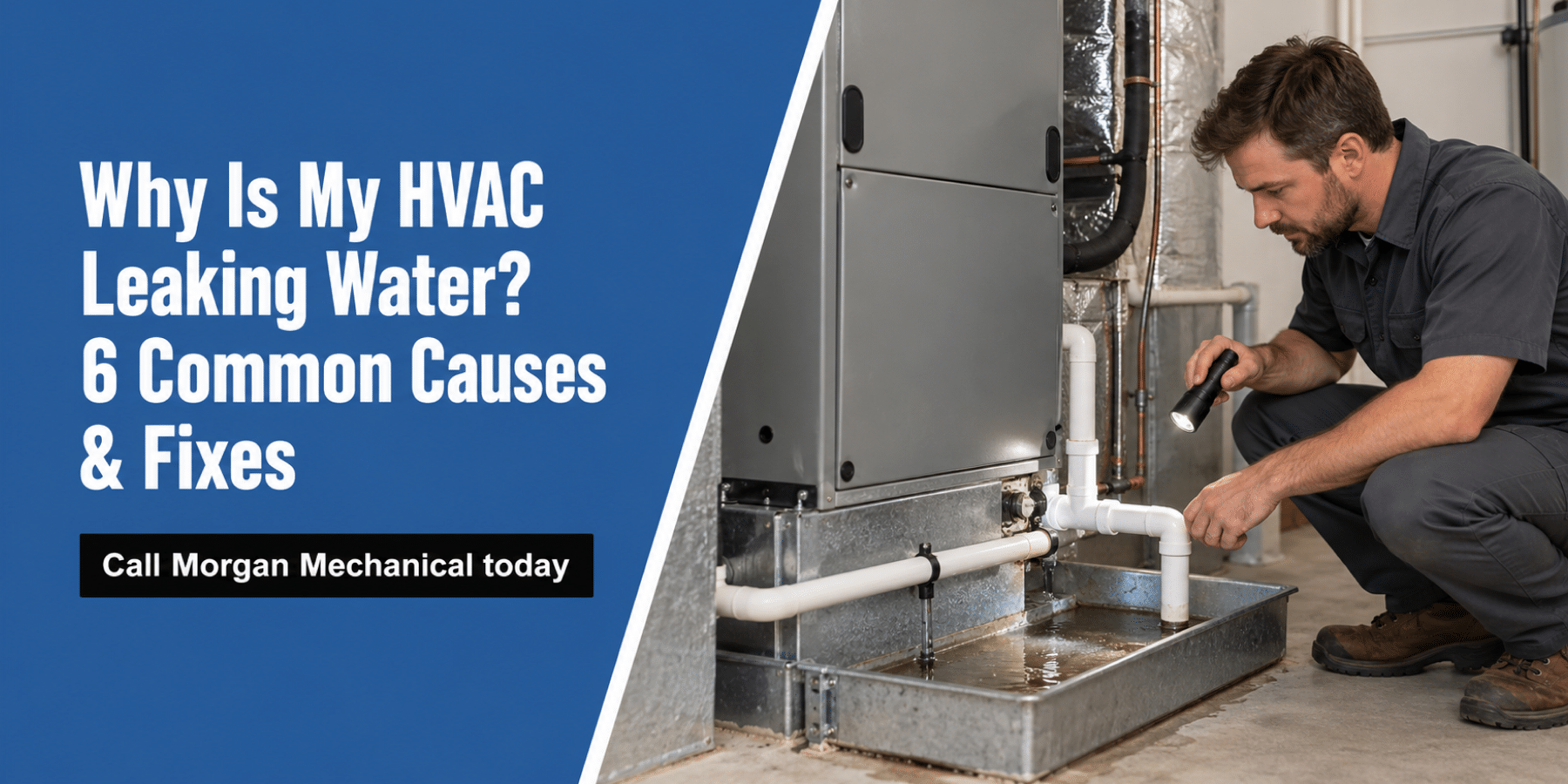
It can be frustrating to see water around the HVAC unit. A small amount of water may not look like a big deal and but it does leads to severe damage to floors, ceilings, walls and even invite molds.
In case you’re thinking, “why is my HVAC leaking water?”. Know that most of these issues are interlinked with condensation, frozen coil, airflow, and drainage.
Let’s look at the common causes of HVAC water leaks.
We will also learn how you can prevent them.
Common Causes of HVAC Water Leaks
1. Clogged Condensate Drain Line
The HVAC systems are designs to automatically produce condensation while cooling the room. The water gets collected in a drain pan and moves out through the condensate drain line present in the system.
Over time, the line can become blocked with:
- Dust and dirt
- Mold and mildew
- Algae
- Other debris
When water does not drain completely, it eventually back flows and over flows all around the HVAC’s indoor unit.
Prevention: Keep a constant check on condensate drain and maintain cleanliness.
2. Frozen Evaporator Coil
A frozen evaporator coil is another common reason for an air conditioner leaking water.
What happens is, the restricted airlow or low refrigerant levels makes the coils freeze. When the ice melts resulting in water, it overwhelms the drain pan.
Common warning signs are:
- Ice or frost around the indoor unit
- Weak airflow
- Poor cooling
- Water appearing after the system shuts off
A frozen coil should be professionally inspected rather than simply thawed and ignored.
3. Dirty Air Filter
You may consider dirty filters as a small part of maintenance issue, but it can result in bigger HVAC breakdowns.
When the filter becomes clogged:
- Airflow decreases
- The evaporator coil can become too cold
- Ice may form on the coil
- Melting ice can cause water to overflow
Prevention: Check your filter regularly and replace it when it becomes dirty. Many filters need replacement every 1–3 months, depending on usage and filter type.
4. Damaged or Rusted Drain Pan
The drain pan operates to receive the condensation before it flows to the drain line.
But older pans can develop:
- Cracks
- Rust
- Corrosion
- Excessive debris
If the drain pan is damaged and old it can make water escape before reaching the drain line.
Prevention: During routine maintenance checks, ask your HVAC service providers to check up the drain pan as well.
5. Low Refrigerant
Having low refrigerant levels can make the coil extremely cold resulting in frozen evaporator coil.
As soon as the ice melts, the water will flow around the unit.
If there are low refrigerants, never rely on refilling completely. It maybe a warning sign for a leakage that require professional help.
Watch for:
- Ice on the coil or refrigerant lines
- Poor cooling
- Longer cooling cycles
- Unexpected water around the unit
6. Condensate Pump Problems
Some HVAC systems need a condensate pump to move water away from the unit.
In some HVAC systems, condensate pumps are required protect the unit from contacting water.
If your pump is failing to get the operation done, condensation may stay in the drain pan, and even overflow eventually.
Possible reasons include:
- Pump failure
- Clogged pump
- Electrical problem
- Dirt buildup
Regular maintenance checks are important if you have a condensation pump.
7. Poor Installation or Drainage
Sometimes, what causes an HVAC unit to leak water is not a failed component at all. The problem may have commenced as soon as unit was installed.
The factors that prevent condensation from flowing away properly are:
- Improper drainage
- Incorrect pipe positioning
- Poor system setup
What to Do When Your HVAC Is Leaking Water
If you notice an HVAC water leak, don’t ignore it.
Start with these simple and basic steps:
- Firstly, turn off your HVAC system if water is constantly leaking.
- Check the filters for excessive dirt.
- See if there is ice around the indoor unit.
- Notice if there is any amount of standing water around the drain pan.
- Do not open electrical panels or attempt refrigerant repairs independently.
Call an HVAC professional if the leakage is not stopping. Continuing the operation while the system is leaking can make the problem worse and increase the risk of water damage.
How to Prevent HVAC Water Leaks
These are few simple habits that can help prevent many common leaks:
- Clean dirty air filters every 15 days.
- Keep return and supply vents unobstructed.
- Regularly run a professional HVAC maintenance.
- Clean and inspect condensate drain.
- Check the drain pan for any rust or cracks.
- Never ignore the ice around the indoor unit.
- Diagnose the unusual water around the unit or musty smells early.
Conclusion
So, why is my HVAC leaking water? It could be clogged drain line, dirty filter, frozen coil, damaged drain pan, refrigerant problem, or installation issue.
The most important thing is to never ignore the water leaks or standing water.
Minor leakage may become expensive water damage real quick. Addressing the warning signs and running a regular maintenance check of your HVAC system is important. It help keep the system running and unwanted puddle off your floor.